CIBOLA COUNTY Experiencing its fourth wettest June on record, the drought situation in Cibola has shown further improvements since May. The percentage of land and population under drought continues to decrease, providing much-needed relief to the county's residents and agricultural sector.
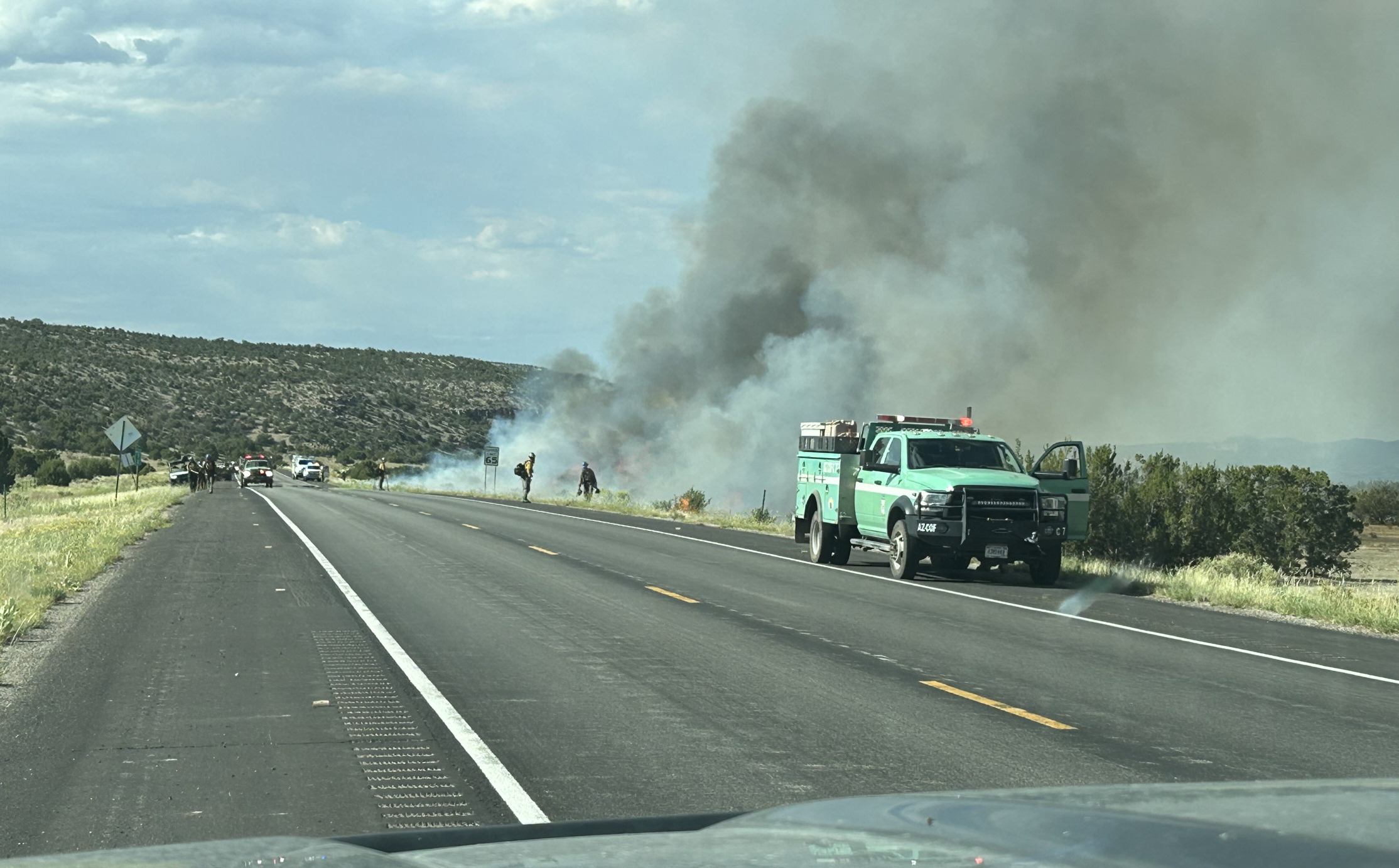
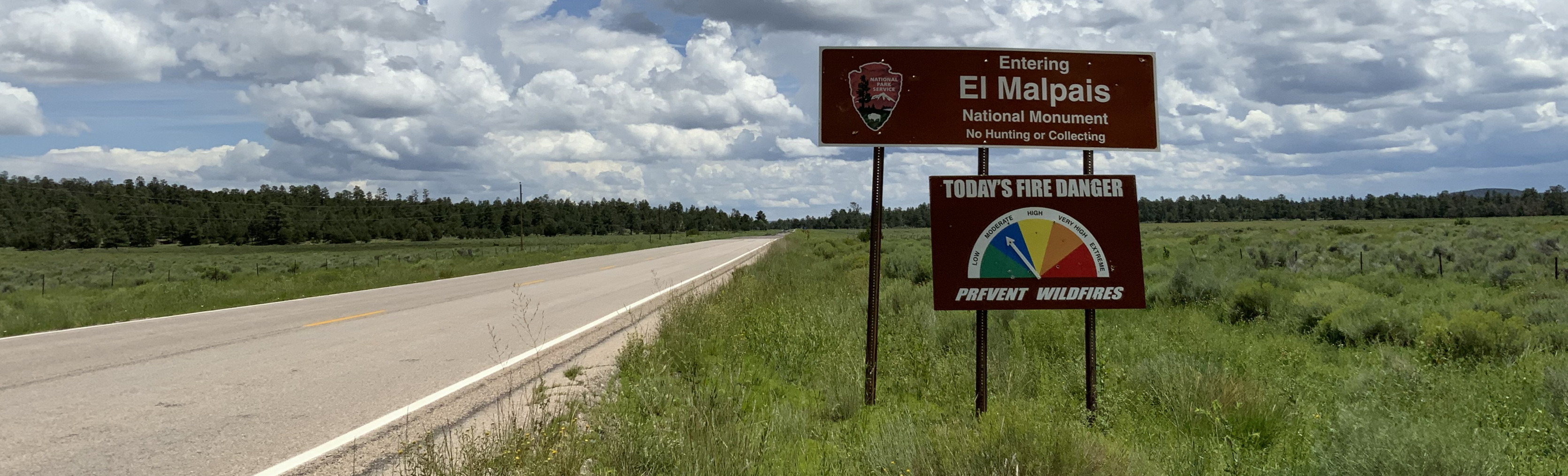
During the reporting period, Cibola was dealing with a June 15 lightning strike sparking a fire in the Zuni Mountains near the El Malpais National Monument. The blaze, named the Encerrita Fire was quickly contained by fire crews, as of the latest update on July 11, crews are watching the remaining smolder as the final embers of the fire burn out.
Drought Across Cibola in June
The U.S. Drought Monitor classifies the severity of drought using five categories, ranging from the least severe designation, 'Abnormally Dry' (D0), to the most severe, 'Exceptional Drought' (D4).
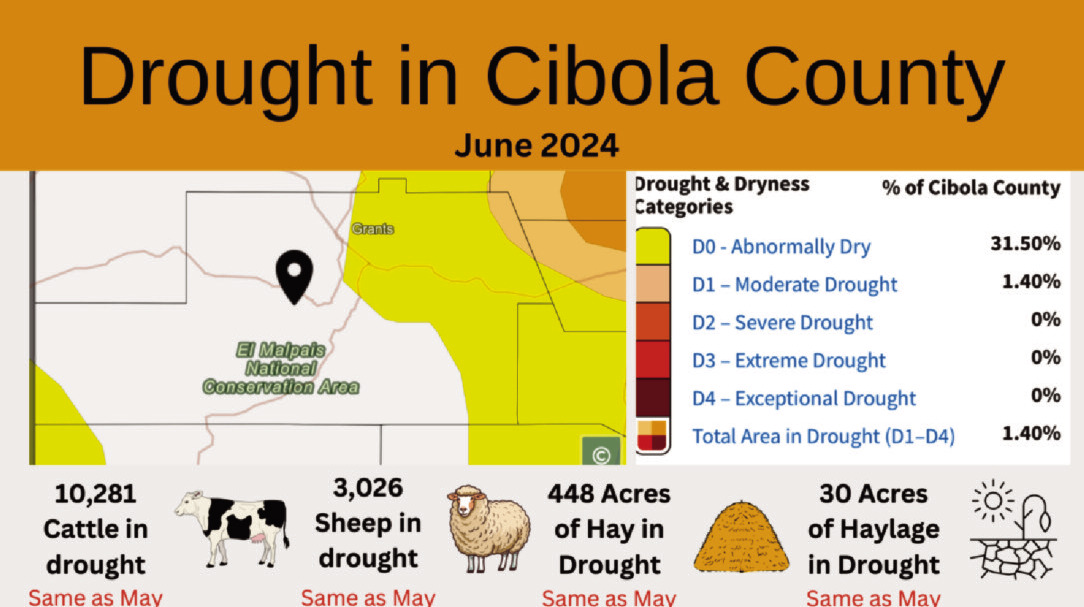
• Abnormally Dry (D0) - 31.50 percent of Cibola is affected, showing a significant decrease from May when 53.51 percent of the county was affected.
• Moderate Drought (D1) – 1.40 percent of Cibola is affected, a slight decrease from May when 1.44 percent of the county was affected.
• Severe Drought (D2) – 0 percent of the county is affected, continuing from May and previous months, where no areas were recorded.
• Extreme Drought (D3) - No areas recorded, the same as in May and previous months.
• Exceptional Drought (D4) - No areas recorded, the same as in May and previous months.
In June, 448 acres of hay were found to be in drought, the same as in May. The acreage of haylage remained constant at 30 acres, showing no change from the previous month. This stability in drought-affected hay acreage shows that conditions for these agricultural resources have not worsened over the past month.
Effecting livestock, 10,281 cattle and 3,026 sheep were found to be in drought during June. This is the same number of livestock affected as in May, indicating no change in the situation for Cibola’s livestock.
The amount of agricultural area and livestock found to be in drought has remained consistent with no changes since March 2024. The Cibola Citizen has contacted each of the reporting agencies, looking to verify this data.
Impact on Population
According to data from the National Drought Mitigation Center (NDMC), the U.S. Department of Agriculture (USDA), and the National Oceanic and Atmospheric Administration (NOAA), only 380 people in Cibola County are directly affected by drought, which represents 1.4 percent of the county’s population. This marks a slight decrease of 3 percent since last week and a significant decrease of 84.6 percent since last month, indicating substantial improvements in drought conditions for the population. The Cibola Citizen has reached out to these agencies for clarification on this data.
June 2024 was the fourth wettest June on record over the past 130 years, with a reported increase of 1.26 inches from normal. Year-todate (January-June 2024), it has been the 15th wettest period over the past 130 years, with an increase of 1.8 inches from normal.
Encerrita Fire
Rainstorms have contributed to the improvements in Cibola’s drought situation, but a storm in the middle of June caused a lightning strike which sparked a fire just south of the El Malpais National Monument in the Zuni Mountains.
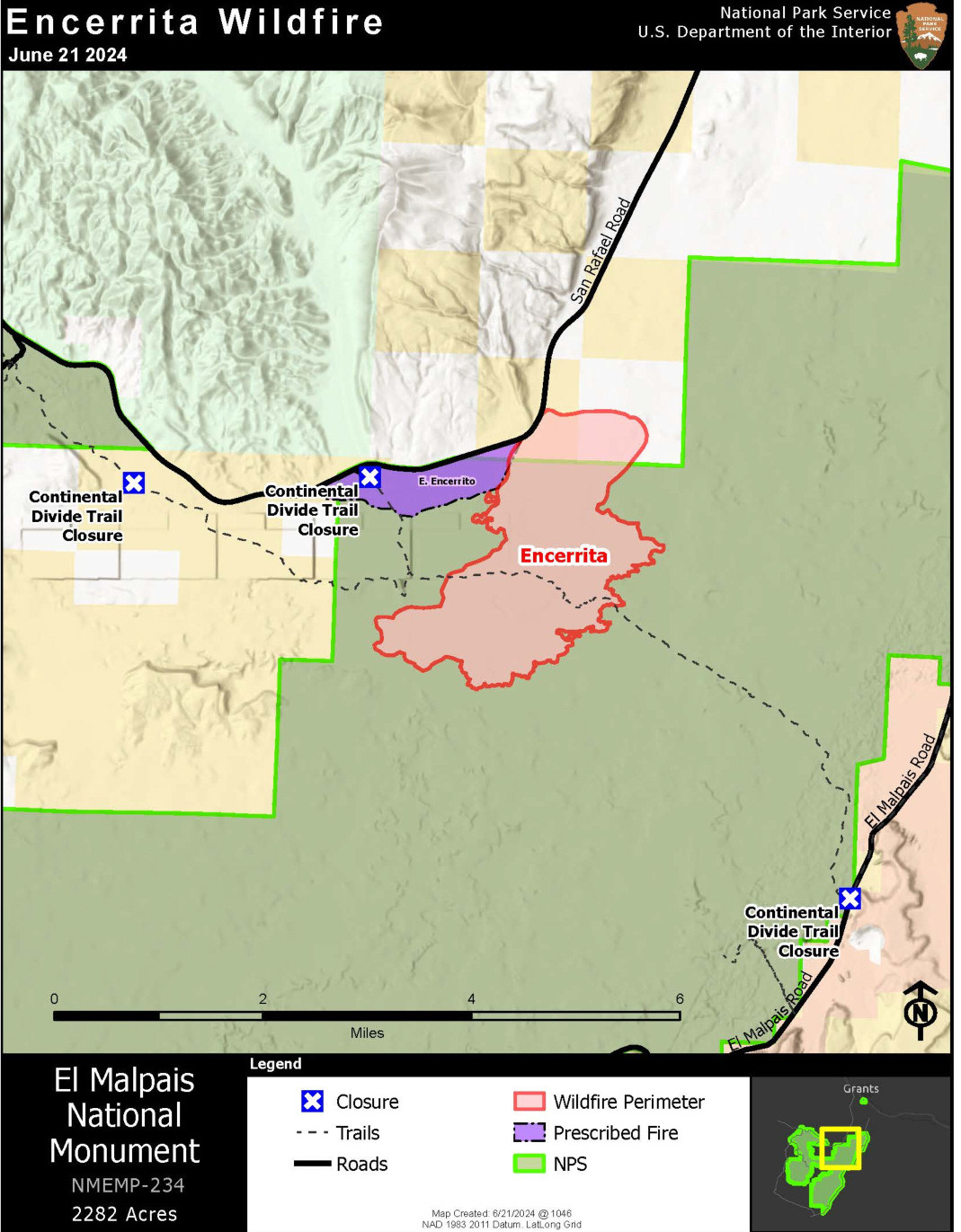
As of the latest report on July 11, the Encerrita Fire, which began on June 15 and burned approximately 1,000 acres in El Malpais National Monument, has been successfully contained. Around 60 firefighters were called out to help contain the blaze. Six crew members remain on scene to oversee the final bits of smolder as it slowly burns out.
Due to the fire, closures were implemented for the Continental Divide Trail and Zuni-Acoma Trail within the monument, as well as parking areas to ensure public safety. Smoke from the fire affected air quality, leading local officials to advise residents on protective measures against smoke inhalation.
Data Sources
The National Integrated Drought Information System (NIDIS) is a tool used by the National Oceanic and Atmospheric Administration (NOAA), which has been tracking drought in the Cibola area since 2006. They use historical data and environmental sampling to get a drought reading on years prior, extending back to 1894, providing 300 years of data.
Much of the data utilized by the Cibola Citizen comes from NIDIS, NOAA, the U.S. Department of Agriculture (USDA), and the National Agricultural Statistics Service (NASS). These entities supply data for Cibola’s acreage of hay, the number of livestock, and the population affected by drought.