
I have always had a small patch of chives close to my kitchen so I could grab a few leaves for whatever I was fixing for dinner. When my youngest grandson was 8 years old, I had a request from my daughter for another pot of chives. My curiosity was peaked. What was she doing with all the chives she already had? The answer is something only little boys would do. As they passed the chives on their way to the house or back out to visit another friend, they would grab a few leaves to chew on like a blade of grass, only with an onion taste. Her one pot of chives could not produce enough leaves to satisfy the needs for the boys and my daughter’s cooking. What a revelation!
What is a Chive?
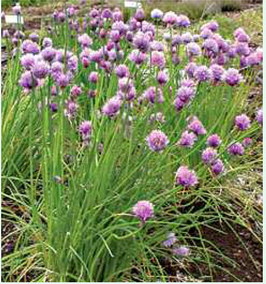
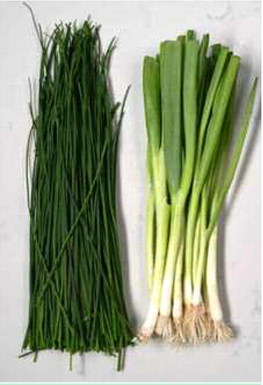
Chives are a part of the onion family. Allium schoenoprasum is a showy flowering perennial plant, native to the cooler regions of the northern hemisphere in North American, Europe, and Asia. It is widely adapted to warmer regions and especially to home gardens. Chives are a bulb that puts out a green, grass-like leaves that are hollow, tubular, narrow, and less than one foot tall. Their purple flowers are very showy and edible. Scallions, green onions, and spring onions are similar to chives but each has a slightly different flavor and use. You can also blend the variety of onions in dishes for a different taste. Chives has the mildest onion taste of all the Alliums.
Cooking with Chives
The common type of chive you see in the grocery store is the French chive which has a mild onion taste. The other chive is called Chinese chive which is flatter and has a mild garlic taste. Both are great for people who don’t like the stronger taste of onion or garlic. The most common use for chives is to add a sprinkle of the chives over a baked potato. You can add them to almost any dish as a flavorful and colorful garnish: smoked salmon, eggs, soups and potato pancakes. It is best to add them just before serving because cooking them for a long time can make them loose their flavor. Chop them with a knife or cut them with kitchen scissors.
Benefits of chives in the garden.
Chives can be planted among other garden vegetables to repel damaging insects and diseases. They have sulfur compounds that bugs won’t come near. Allium plants (all of the onion family) protect flowers from mildew, black spot, and aphids. The flower is not only colorful in flower gardens but it also supplies nectar for pollinators.
How to grow chives
Chives are easy to grow either from seed or bulb. Plant seeds ¼” deep in good potting soil or garden soil enriched with compost or manure. The seeds will germinate in a week and the chive plants will be ready to cut for meals in two months. You can also divide clumps of chives or wait until winter and break apart the tubers to be replanted in spring. They can be grown in containers by the door near your kitchen, ready to be picked for recipes. They are also good to prevent soil erosion on slopes where the plant’s roots mass will anchor the hillside soil.
Try them. There are many benefits gained by having your own pot or bed of chives.
Edith Iwan is a Cibola- McKinley County Master Gardener who lives and works in Thoreau. As a Master Gardener she assists the County Cooperative Extension Service in providing accurate, research-based gardening information to county residents. If you have any gardening questions, please call the NMSU Cibola County Extension at 505-287-9266 or NMSU McKinley County Extension at 505-863-3432