October 2023 was the fifth driest October in 129 years of data tracking in the area. According to the National Integrated Drought System, October saw a rainfall deficit of 3.72 inches of rain when compared to the average rainfall for the month.
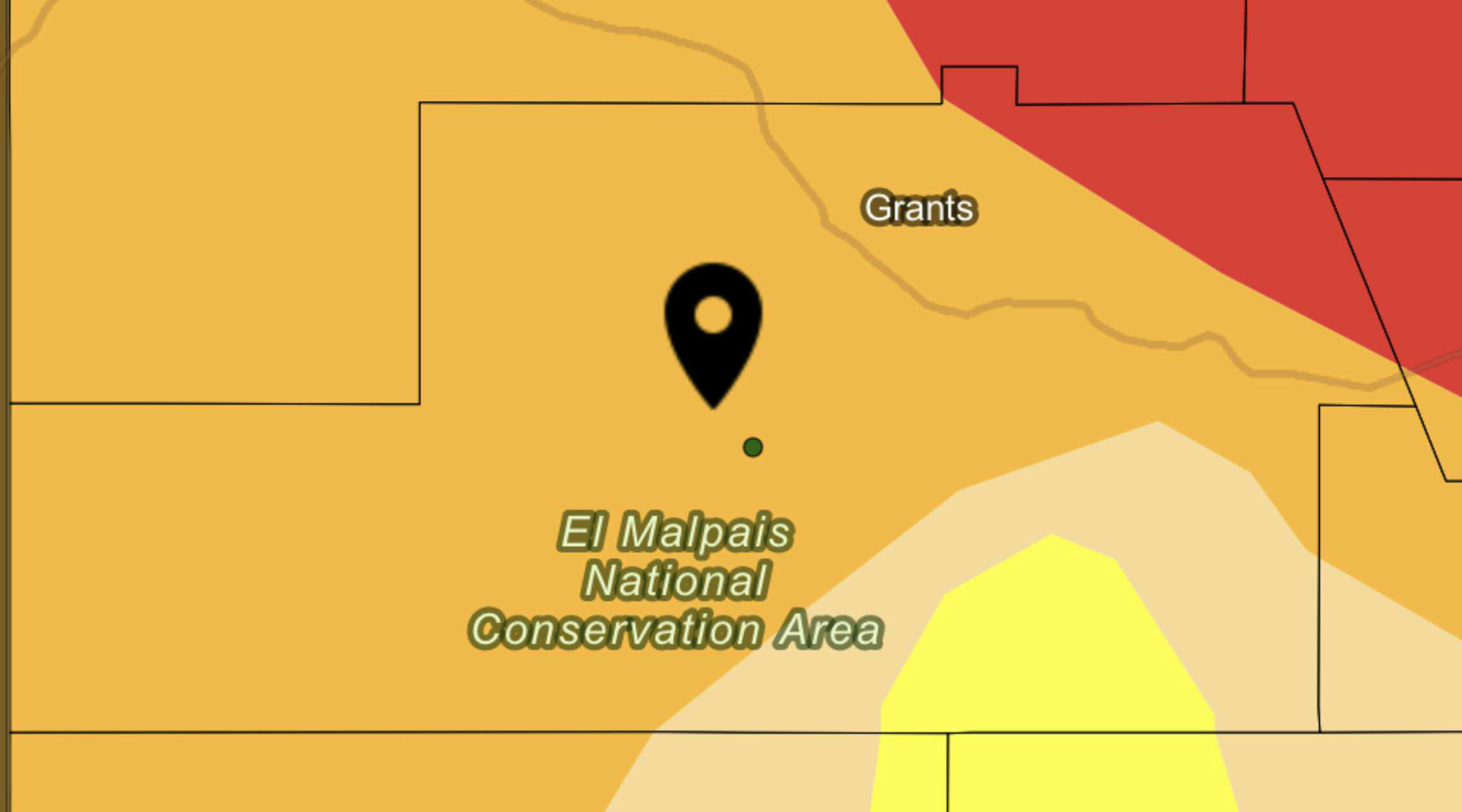
The northeast and northern portions of Cibola County are currently experiencing Extreme Drought.
From the start of the year, drought conditions have worsened in the county. In January, 0.39 percent of the county was in the “Severe Drought” designation. In September, that percentage of Cibola in Severe Drought has worsened to 74.28 percent.
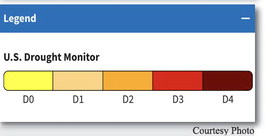
The USDA tracks two categories as the worst levels of drought in the county: “Extreme” and “Exceptional” drought. Today, 7.04 percent of Cibola is in the “Extreme” category, zero percent of the county is in the “Exceptional” category.
Climate researchers with the USDA have long been expecting drought to worsen in the northeast corner of the county. Back in October, climate scientists changed their thought on the drought track, expecting the northeast portion, southeast portion, and a sliver of Cibola from south of Grants to San Mateo to worsen, and it did. Today, the scientists are looking at the northeast section of Cibola County and a small corner of southeast Cibola to maintain the current “Extreme” drought, but are expecting the drought situation to fall back to Moderate Drought over the next few months.
Current Drought Rating
The drought situation in Cibola has worsened significantly through the year.
According to the United States Department of Agriculture, 421 acres of hay are in drought. This is compared the same acreage of hay estimated to be in drought, in September. 28 acres of haylage are in drought, this is the same amount that was in drought in September.
The USDA estimates that 9,662 cattle are currently in drought, a minor increase from September where 9,550 cattle were in drought; in comparison, in August 653 cattle were in drought. Today, 2,844 sheep are in drought, this is a minor increase from September where 2,840 sheep were in drought, a minor decrease from the 2,841 sheep which were in drought in August.
“Exceptional Drought” Tracking Cibola’s rainfall lessened the shock of the “Exceptional Drought” back in May.
2013 was the first time Cibola entered the “exceptional” category, the rating lasted for several months before ending.
While the county remained in drought, it was not given the “exceptional” rating again until 2020. The rating was assigned in December, and persisted through most of 2021.
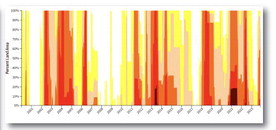
May of 2022 saw the worst “Exceptional Drought” in county history. The United States Drought Monitor tracks the severity and length of drought across the country. The severity of 2022’s “Exceptional Drought” was starkly more severe than either of the previous two times this rating was assigned to Cibola. However, 2022’s situation lasted for a shorter amount of time than either of the previous two instances.
In 2022, Cibola suffered through the driest May over the past 128 years of drought tracking in the county, the area was suffering so badly that scientists who conduct drought tracking declared Cibola was in an “Exceptional Drought” the worst level of drought recognized by the federal government. In June 2022, a large wildfire, the Cerro Bandera Fire, destroyed 939 acres of land in the Zuni Mountains. Fire personnel in Cibola rallied together after the fire, asking for increased fire restrictions through the month of June, especially because the Independence Day holiday was rapidly approaching and residents often celebrate with fireworks. At the time, the drought rating in Cibola was at the highest rating recognized by federal authorities who track drought across the country. Increased rainfall at the end of June, continued through August, was enough for local governments to lift some firework and open burning restrictions. Rainfall, despite expectations by meteorologists, did not stop fully but has decreased from earlier months. Cibola’s drought conditions have improved measurably since the driest days of 2022.
Drought Data
The National Integrated Drought Information System is a tool used by the National Oceanic and Atmospheric Administration; a department of the United States known by many as the team who tracks Santa Claus during the Christmas holiday. NIDIS has been tracking drought in the Cibola area since 2006, and they use other historic data and environmental sampling to get a drought reading on years prior, all the way up to 1894.
Much of the data Cibola Citizen utilizes comes from NIDIS, but also NOAA and the US Department of Agriculture and the National Agricultural Statistics Service. These entities supply data for Cibola’s acreage of hay and number of livestock.