How Escalante Can Transform Northwest N.M. and Cibola

SANTA FE, N.M. – Facing questions about sustaining the economy when the future OF coal and other fossil fuels is up for debate, the State of New Mexico is looking to hydrogen power to meet any gaps in power generation and increase state revenue while diversifying the state’s income stream. Where these hydrogen stations would go is up for debate, but Cibola’s elected officials in both the state legislature and locally are fighting hard to get the new hydrogen power plant in the old Escalante Power Generating Station located at Prewitt, N.M.
Fighting for this, a large delegation of Cibola’s elected and community leaders attended a legislative committee meeting on January 11 in Santa Fe, N.M. at the Roundhouse. This Cibola delegation was met by legislators, – both senators and representatives – NM Environment Department Secretary James Kenny, and NM Economic Development Department Secretary Alicia Keyes.
The Cibola delegation included Milan Mayor Felix Gonzales; Milan Trustee James Mercer; Cibola County Commissioner Ralph Lucero; Village of Milan Manager Linda Cooke; Cibola Communities Economic Development Executive Director Eileen Yarborough; and JoAnne Martinez, President of Grants MainStreet Project, President of Grants-Milan Rotary, Executive Board Member of the Grants-Cibola County Chamber of Commerce, and Community Relations Specialist for Homestake Mining Company.
What is Escalante?
Escalante is a now-retired coal power generating facility in McKinley County, specifically it is in Prewitt, N.M., making it incredibly close to the border of Cibola County at not quite 20 miles from the City of Grants.
The facility was retired not long after New Mexico Governor Michelle Lujan Grisham signed the Energy Transition Act, a law which requires all of New Mexico’s power generating facilities to switch to environmentally friendly fuel. Despite promises given to local legislators by the facility’s management, the plant was shut just weeks after the law was signed – it had not even taken full effect by the time the closure occurred. The bill shook up the political world within the county and saw Cibola lose a state senate seat to Valencia County.
Since the closure of Escalante – which sent shockwaves through the economies of Cibola and McKinley Counties – state legislators have been working to transition the facility in a way that would protect the future of jobs, economy, and energy at the plant to benefit the counties who rely on its economic success. To prove their work, the New Mexico State Legislator held a meeting of the Legislative Finance Committee on the third floor of the Roundhouse in Santa Fe, N.M.
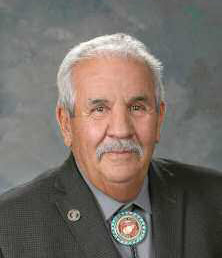
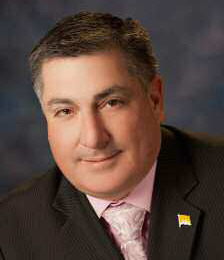
Two of Cibola’s legislators, Representative Harry Garcia (D – Bernalillo, Cibola, McKinley, Socorro, San Juan, Valencia), and Senator George Munoz (D – Cibola, McKinley, San Juan) both sit on the finance committee and were in this meeting. Notably, Rep. Patricia Lundstrom (D – McKinley, San Juan) was the chairperson of the committee, Rep. Lundstrom was raised in Cibola and has shown significant interest in revitalizing Escalante to hydrogen power.
If successful, Escalante will be known as the Escalante H2 Power Generating Station.
What is the Timeframe?
The bipartisan (meaning the committee had members of both major political parties), bicameral (meaning the committee had members from both the state House of Representatives and the state Senate) committee heard from NM Environment Department Secretary James Kenny and NM Economic Development Secretary Alicia Keyes.
The two secretaries offered forward-looking statements about the future of hydrogen power in New Mexico. State Representative Nathan Small (D – Dona Ana), spoke about the importance of getting a plant like Escalante to transition to hydrogen power. The process to transition Escalante from coal power to hydrogen power will not begin immediately, however, this project is massively expensive and the large pool of money available for this project is highly competitive.
While the money may be competitive, the US Department of Energy is encouraging New Mexico to go after this money. New Mexico is not working alone. Governor Lujan Grisham’s administration has joined a bipartisan coalition of states to see that N.M. and fellow states get a fair share of the funding, according to Secretary Kenny.
Colorado, New Mexico, Utah, and Wyoming have all jointly agreed to work together to see energy security. Secretary Keyes pointed out that this effort is bipartisan on a national level, with two republican governors and two democrat governors in power when the program began and through the duration of the process.
The program began almost a year ago, in February 2022. The coalition of states has until April to send their full-fledged application to the federal government for approval. Secretary Kenny said that should the coalition be approved for funding; the money will not be open to the coalition until late summer or autumn of 2023.
WISHH
The coalition of states has called this joint hydrogen project the Western Inter-State Hydrogen Hubb, or WISHH. This program includes a number of projects that will situate the coalition – N.M., Colo., Wyo., and Utah – in a position where they can create job opportunities for decades to come and help meet not only New Mexico’s ambitious climate goals, but further the national climate goals as well.
Adding to the timeline is the issue of labor. Northwest New Mexico has the ability to manage Escalante H2 Generating Station, but the labor force does not have the required education or experience to work with hydrogen. To help cope with this, Secretary Keyes mentioned that the state is working on creating training programs to prepare the workforce for when Escalante can be transitioned to use clean energy.
As legislators discussed how WISHH will benefit New Mexico, Rep. Garcia of Cibola County asked a question on behalf of Milan Mayor Gonzales. “What impact will this have on small communities?”
This is where Secretary Keyes explained that training programs will be brought into the local communities. Secretary Kenney said that WISHH has requirements to keep the federal money within the community it was intended for, and that the state will work to make sure bad-actors do not take advantage of the small communities, “We are not opening the door and asking [just] anyone to come. We’re asking those who want to follow the laws and rules to come.” Secretary Kenny continued by saying, “I couldn’t agree more, we don’t want to leave our small communities out of this project.”
There is still a significant amount of work to be done before this project can be fully completed, but the Cibola delegation’s presence at the committee meeting showed just how excited the community’s leaders are for the future of hydrogen power in northwest New Mexico.