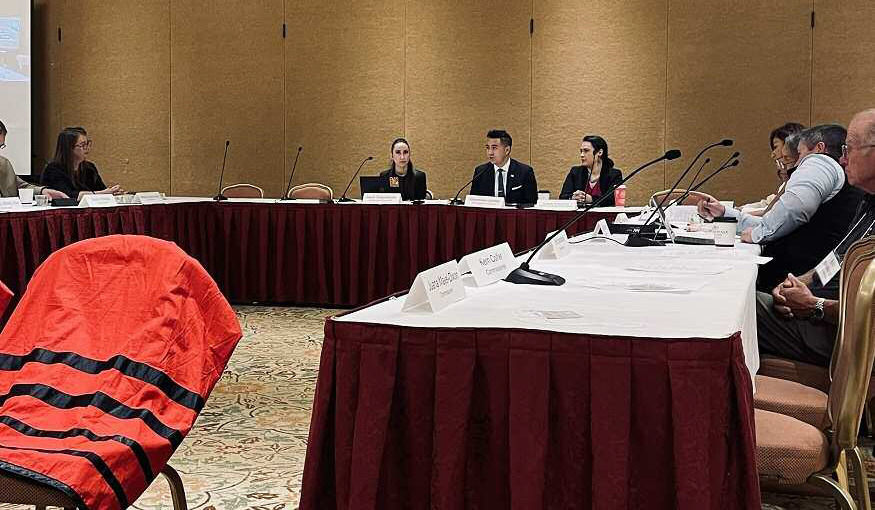
In a public hearing held by the Not Invisible Act Commission on June 28, the Department of Justice unveiled a groundbreaking initiative aimed at addressing the ongoing crisis of missing or murdered Indigenous persons (MMIP). The newly launched Missing or Murdered Indigenous Persons Regional Outreach Program will deploy 10 attorneys and coordinators to five designated regions across the United States, including the District of New Mexico, to aid in prevention and response efforts.
US Attorney General Merrick B. Garland expressed the Justice Department's commitment to combatting the MMIP crisis, which has had a devastating impact on victims, their families, and entire Tribal communities. The program's goal is to provide specialized support, mobilize resources, and ensure justice for American Indian and Alaska Native families.
The program, consistent with the Justice Department's Federal Law Enforcement Strategy, prioritizes MMIP cases and will dedicate five MMIP Assistant U.S. Attorneys and five MMIP coordinators. These personnel will collaborate with federal, Tribal, local, and state law enforcement agencies, as well as nongovernmental partners, to investigate unresolved cases and related crimes. By promoting communication and coordination, the program seeks to ad- dress the crisis comprehensively.
One region benefitting from the MMIP program is the District of New Mexico, which includes Cibola County. The district will receive a dedicated MMIP Assistant U.S. Attorney to assist in combatting MMIP cases in New Mexico, but will have to share the attorney with Colorado, Utah, Nevada, and Arizona. This development comes at a crucial time as two cases involving missing and murdered Indigenous women with connections to Cibola County remain unsolved.
The first case involves Ella Mae Begay, who went missing from her Sweetwater, Arizona home in June 2021. The United States Department of Justice has recently brought charges against Preston Henry Tolth of Thoreau, New Mexico, in connection with her disappearance. Tolth is currently on trial for other charges, including armed robbery. The indictment alleges that Tolth assaulted Begay before taking her vehicle across state lines.
The second case revolves around Mona Renee Vallo, a member of the Confederated Tribes and Bands of the Yakama Nation, who was found dead due to a hit-and-run accident near U.S. Route 66, New Mexico Highway 124, in March 2022. Authorities have struggled to identify the driver or vehicle involved in the incident, and the case remains unsolved. The FBI has doubled the reward money to $10,000 in the hope of obtaining crucial information.
These cases highlight the urgent need for justice and resources to address the high number of unsolved crimes against Indigenous women. With the introduction of the MMIP Regional Outreach Program, the Department of Justice aims to mobilize its resources, provide support to communities, and ensure a coordinated effort to prevent and respond to MMIP cases. The program seeks to amplify the voices of victims and their families as they navigate the criminal justice system, working hand in hand with law enforcement agencies to bring closure and justice to affected communities.
As the Department of Justice takes these steps forward, they are hoping the MMIP Regional Outreach Program will serve as a crucial tool in combating the crisis of missing or murdered Indigenous persons and creating a safer environment for all communities.