
In a joint effort to tackle hate crimes and promote community resilience, a coalition of federal, state, and local agencies gathered for the 'United Against Hate' webinar on December 5. Hosted by the United States Attorney’s Office for the District of New Mexico, the Albuquerque Police Department, the Federal Bureau of Investigation’s Albuquerque Field Office, the New Mexico Department of Homeland Security & Emergency Management, the Department of Justice’s Community Relations Service, and the City of Albuquerque’s Office of Equity and Inclusion, the online event aimed to educate and empower nonprofits, community leaders, businesses, educators, and religious leaders in identifying, reporting, and preventing acts of hate.
The Department of Justice's United Against Hate program serves as a bridge between law enforcement and marginalized communities, helping them to jointly combat hate crimes and bias-motivated incidents. The program not only educates the public about these issues but also fosters trust between the community and law enforcement while strengthening local networks to address unlawful acts of hate.
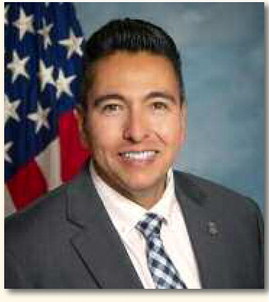
U.S. Attorney Alexander Uballez delivered the opening statement, emphasizing the importance of community cohesion, stating, 'We are a single community that has to figure out how we live together in peace. The truth is that the answers are never simple, they are never one-sided. The truth is punishment alone doesn't work, but neither does leniency alone. There must be both consequences and forgiveness. Penance and reconciliation.' He urged unity and encouraged attendees to demonstrate the community's potential for positive change.
Assistant United States Attorney Niki Tapia-Brito provided an overview of hate crime laws, highlighting the federal statutes that protect against offenses driven by bias related to race, religion, disability, ethnicity, national origin, sexual orientation, gender, or gender identity. Tapia-Brito stressed the importance of reporting hate crimes and bias incidents, even if successful prosecution is uncertain, as it helps law enforcement identify trends and patterns. She also emphasized the availability of remedies for victims under civil statutes.
APD Deputy Chief Cecily Barker and Commander Kyle Hartstock discussed the steps taken by the Albuquerque Police Department to combat hate crimes and connect with the community. They shared insights into the Ambassador Program, which assigns officers to various communities, including faith-based groups, LGBTQ2+ communities, Hispanic communities, Native American communities, refugees, veterans, senior citizens, African American communities, Americans with disabilities, and youth groups. These ambassadors work to build trust and provide resources to bridge the gap between the community and law enforcement. The commanders also highlighted successful cases where community engagement played a pivotal role in solving crimes.
Special Agent in Charge of the FBI’s Albuquerque Field Office, Raul Bujanda, emphasized the FBI's role as the lead federal investigative agency for civil rights matters and hate crimes. Special Agents urged immediate reporting of potential hate crimes, even if the reporting agency is not certain. They provided contact information for reporting suspected hate crimes to the FBI: online via tips.FBI.gov or by phone at 1-800-CALLFBI (1-800-225-5324).
Marcella Benton from the New Mexico Department of Homeland Security and Emergency Management introduced the Nonprofit Security Grant Program, which provides funding for security enhancements, including cybersecurity, to nonprofits at high risk of hate crime targeting. Eligible organizations include houses of worship, private educational facilities, medical facilities, and other 501(c)(3) organizations.
Kim Milstead from the U.S. Department of Justice’s Community Relations Service (CRS) discussed CRS' mission of resolving community conflicts and preventing and responding to hate crimes arising from differences of race, color, national origin, gender, gender identity, sexual orientation, religion, or disability. CRS offers impartial, voluntary, confidential, and free services such as mediation, consultation, and training in partnership with various organizations, leaving communities better equipped to address incidents.
Executive AUSA Aja Brooks concluded the webinar by expressing gratitude to the presenters and participants, recognizing their roles in advancing the community's resilience and their commitment to being part of the solution.