
How “Dignity Not Detention” Can Close Local Jail
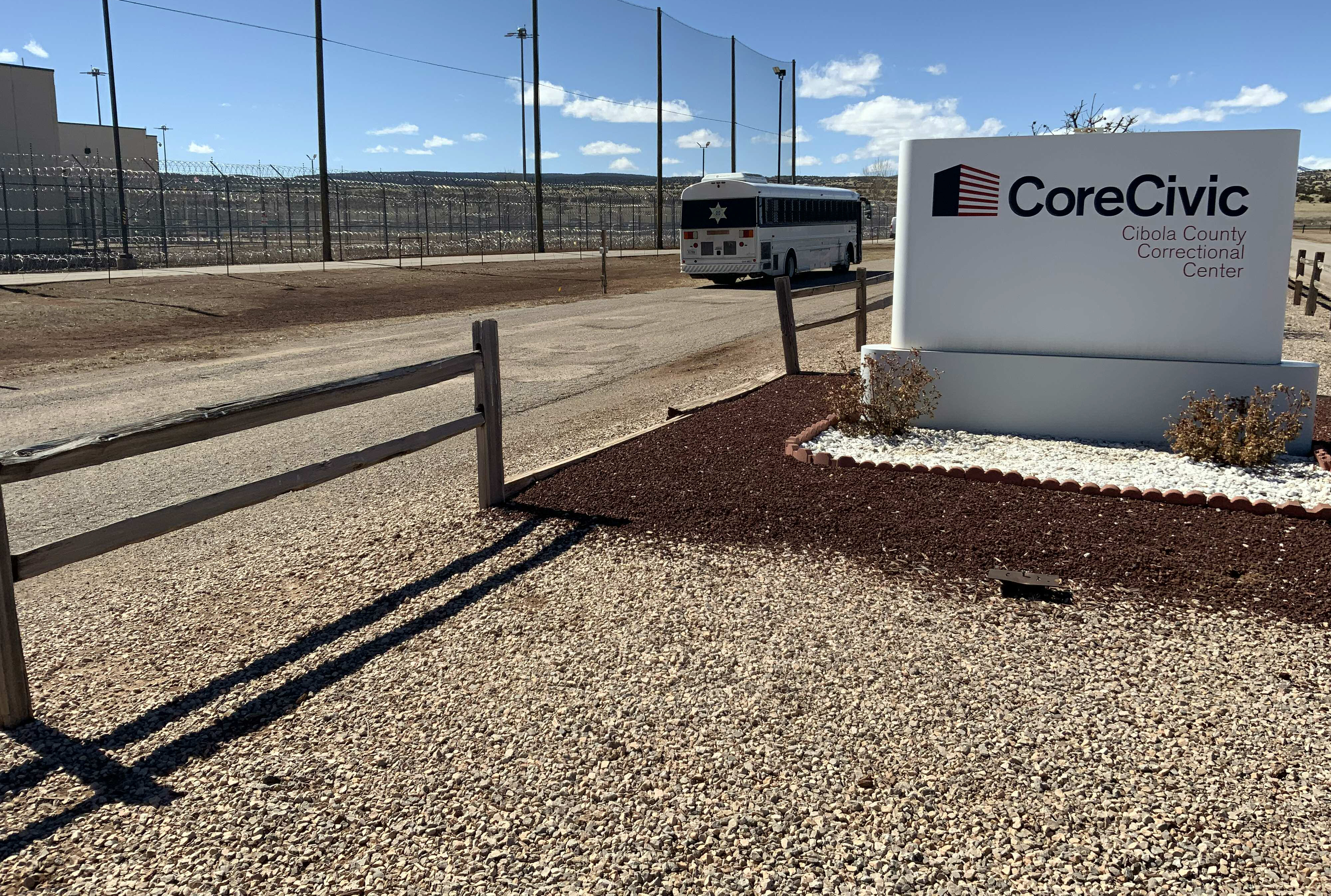
GRANTS, N.M. – Cibola County Correctional Center is Cibola’s embattled jail That battle may be coming to a head as the New Mexico State Legislature debates legislation which may force the governments of Cibola to end their contract with the private detention facilities.
The legislation is nicknamed “Dignity Not Detention,” but is officially known as “No Detaining for Fed Immigration Violations.” The bill has cleared one of its major hurdles to become a law.
CCCC is a facility which houses three groups of inmates: Local detainees who are arrested by any of the law enforcement agencies that operate in Cibola; US Marshal Service detainees; and illegal immigrants who are detained by Immigrant and Customs Enforcement – more commonly known as ICE.
A number of local community members have died in CCCC over the years. Detectives with New Mexico State Police and Milan Police Department were always called to investigate the deaths, which were always ruled as suicides. Several of these deaths have triggered a number of lawsuits against the facility and the government of Cibola County. The local deaths are not the reason New Mexico’s legislature is debating the closure of CCCC, however.
Preventing Cibola from Contracting with CCCC
Cibola has three major governments: Cibola County, City of Grants, and Village of Milan. The city and village both use an “intergovernmental service agreement” through the county government that allows all three entities to house their detainees at CCCC.
Senate Bill 172, proposed on the second day of this legislative session by Senators Gerald Ortiz y Pino (D – Bernalillo), and Antonio Maestas (D – Bernalillo) seeks to stop the state govern- ment, all county and local governments from contracting with detention facilities that house ICE detainees. In effect, they seek to ban all “intergovernmental service agreements” with these ICE facilities.
There are only three jails in New Mexico that would be effected by this bill if it passes. They are Cibola County Correctional Center in Milan; Torrance County Detention Center in Estancia; and Otero County Processing Center in Chaparral.
SB172 has passed its first committee in the senate, the Health and Public Affairs Committee, on February 8. The bill is expected to be heard in the Senate Judiciary Committee in the next two weeks.
In response to SB172, the Cibola County Board of Commissioners passed a resolution in opposition to the bill. This is because, if the bill passes, so long as CCCC holds ICE detainees, Cibola County would not be allowed to contract with CoreCivic. All of the county commissioners voted yes on this resolution except for Commissioner Martha Garcia who was absent.
If Cibola County cannot contract with Core-Civic, the private company that manages CCCC, then all three local governments would have to find their own way to house local detainees.
Cibola County Manager Kate Fletcher has said several times in the past that she is happy Cibola does not run its own detention center. She said they bring so many liability challenges to the county which would tie up the current economic success of the county with a number of lawsuits that can otherwise be prevented.
The Cibola Citizen reached out to County Manager Fletcher, City Manager Donald Jaramillo, and Village Manager Linda Cooke to see what the governments are doing about the potential closure of CCCC. This was back when the bill was first introduced. The New Mexico Immigrant Law Center provided the newspaper with information about the bill, which the newspaper shared with these managers in an email. They never replied.
At the Coffee With the Managers event in December, Manager Fletcher was pressed by a community member on the importance of closing CCCC. She said that even if Cibola had its own jail, the local governments would not be able to provide the level of medical, nutrition, and security that CCCC offers.
All three governments in Cibola utilize CCCC. Cibola County Sheriff’s Office, Grants Police Department, and Milan Police Department take the detainees they arrest to the CCCC for booking and housing until they can be seen by a judge.
It is important to note that while this bill seeks to prevent local governments from signing new agreements with facilities that contract with ICE, it would not stop existing contracts with ICE. The Cibola Citizen is looking to determine when the current intergovernmental service contract between Cibola, CoreCivic, and ICE comes to an end.
A History of Neglect
Several ICE detainees – illegal immigrants who crossed the border illegally but exercised their legal right to seek asylum – have died at CCCC under suspicious circumstances. Until just a few years ago, CCCC was the only ICE facility in the western United States that could house transgender detainees. Trans detainees in this facility often reported allegations of abuse, discrimination, and denial of proper medical care.
In 2018, Transgender ICE detainee Roxsana Hernandez was travelling to the United States illegally from Honduras. When she arrived at a US border checkpoint, she announced her intention to file for asylum to border guards that did their legal duty of arresting her until she could see a judge. Hernandez never had the opportunity to file for asylum. She was transferred from facility to facility. From San Ysidro, California, to El Paso, Texas, to CCCC in Milan, to Cibola General Hospital in Grants, then to Loveless Medical Center in Albuquerque where she died. This took course over the period of exactly one month, April to May of 2018. CCCC alleged no wrongdoing, but other detainees in the facilities and an independent autopsy of Hernandez’ body alleged that she was beaten with a blunt object before she died. According to the Transgender Law Center, this beating allegedly took place after she was denied necessary medication to help regulate her body to help regulate the AIDS which had been plaguing her.
Hernandez’ death sparked a firestorm, with US Senator Martin Heinrich visiting the facility in 2019 with a congressional delegation that ultimately triggered a congressional investigation that found serious inadequacies at CCCC and mandated the facility to fix these issues. In response, the transgender wing of CCCC was closed and detainees were moved to various facilities across the country.
While Hernandez’ death ushered in changes to the way CCCC operates, it did not close the ICE part of the facility.
More recently, the New Mexico Immigrant Law Center has informed the Cibola Citizen about hunger strikes at CCCC by immigrant detainees who claim they are denied medical access, treated with discrimination, and denied human rights. The hunger strikes were being done to bring attention to their plight, but according to NMILC, these ICE detainees were deported three weeks after the story broke.
In August another lawsuit was raised against CCCC after an ICE detainee, Garrido Diaz, was allegedly denied medical treatment for a broken ankle. When ICE tried to deport Diaz, his home country of Nicaragua refused to accept him because of the broken ankle.
Following these incidents, NMILC and a number of state legislators raised the issue of stopping local governments from contracting with ICE facilities, not just CCCC, but all three of the ICE facilities in New Mexico.
Cibola’s Contract with CCCC
Through Freedom of Information Act requests and Inspection of Public Records Act requests the Cibola Citizen has been able to receive around 80 pages of documentation surrounding Cibola County’s contract with CCCC and ICE. The newspaper is actively combing through these documents to better understand what the details of the deal between the county and local governments are with CCCC.
The current contract was signed on October 25, 2016. At the time, a different government was in power.
At the time, the county commission was made up of Robert Armijo in District I, T. Walter Jaramillo in District II, Jack Moleres in District III, Patrick Simpson in District IV, and Lloyd F. Felipe in District V. Commissioner Moleres did not sign the contract as he was absent at the October 26, 2016 signing of the contract. Then-County Manager Tony Boyd and then-County Clerk Elisa Bro also signed the contract.
Current County Manager Kate Fletcher signed an updated agreement with CCCC and ICE in 2017. The agreement received by the newspaper is heavily redacted and came after FOIA requests with the Department of Homeland Security.
The Cibola Citizen is still reviewing these documents to understand when the contract is set to expire, as it is not immediately obvious.
SB172, if it becomes law, will not stop existing contracts that local governments have with ICE detention facilities; it will only prevent contract extensions and new contracts from being signed with these facilities.