
Rosanne Boyett
“Books give soul to the universe, wings to the mind, flight to the imagination, and life to everything.” Plato
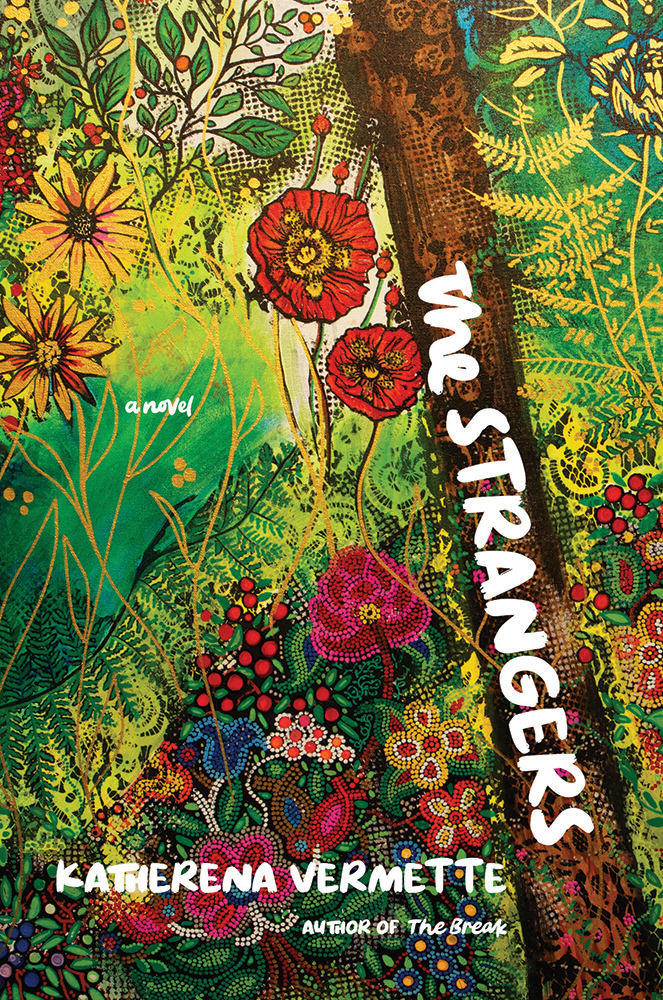
The novel “The Strangers” describes four generations of Métis women as each confronts life’s challenges. [The Métis are an Indigenous people whose historical homelands include Canada's three Prairie Provinces, as well as parts of British Columbia, the Northwest Territories, parts of Ontario and the northern United States.] Author Katherena Vermette deftly draws the reader into the familial tragedies of Grandmere Annie, her daughter Margaret, Annie’s granddaughter Elsie and her daughters Phoenix and Cedar-Sage. Vermette contrasts their life stories, highlights the different personalities, and explains their choice of coping mechanisms. Each generation demonstrates the power of matrilineal bonds as the women survive childbearing, poverty, and racial discrimination. Angelique (Grandmere Annie) is devastated by the death of her favorite son. Her only daughter, Margaret is always angry - at everyone and everything in her life.
“That’s what everyone became, small stories, tiny really . . . Margaret used to think this was normal, that all families were made up of so many sad stories,” wrote the author. “As if sad stories were the only heirloom they had to pass on.”
Margaret’s daughter Elsie believes her mother hates her. She gets pregnant as a teenager in an effort to escape feelings of worthlessness.
Then Margaret sells the family home that she had inherited from her mother Annie. Elsie is forced to leave the only home she has ever known and move into subsidized housing with her daughters - Phoenix, Cedar-Sage, and Sparrow. Protective Services eventually removes the young girls from Elsie’s care because she is unable to provide a stable family environment.
The eldest, Phoenix, ends up in “juvie” for reasons that are never clarified. Cedar-Sage and Sparrow are placed with the same foster family but after a short time Sparrow dies from a lack of medical care.
Elsie spirals downward following Sparrow’s death and seeks solace in alcohol and illegal drugs.
Despite her best intentions, staying “clean” is only a temporary condition.
Vermette recounts Elsie’s visit to her aunt’s apartment. Elsie quietly rifles through the medicine cabinet; quickly ingests two oxycodone pills, and returns to the living room where her Elders are reminiscing.
“Elsie sits listening to her Auntie Genie and Uncle Toby and thinks about her family and oral traditions. Her Elders sit in silence for a spell before they get ‘on old stories.’ It never takes that long with these two. Never has with anyone in Elsie’s family, really. Nothing breaks an awkward silence like a good ‘remember when . . .’ She wonders if that’s a Métis thing too. To always talk about the good old days. Not that they were good. Only old. And shared. ‘Remember when your dad and you guys put that front porch on the house? Oh but that was funny, you younger guys didn’t know what the heck you were doing’ . . . ” recalled Auntie Genie.
Elsie nods off listening to their conversation; later she returns to Uncle Toby’s apartment to sleep on his sofa while he watches soap operas.
“You know Indigenous kids commit suicide more than any groups in the whole wide world,” Phoenix tells Cedar-Sage. “That’s how sad it gets. I guess that’s why they teach us we are sacred. And we should honor our ancestors by trying to live a good life. It’s because we live in a world that doesn’t value us or show us that we are loved. But we are. By our ancestors.” Phoenix, like her grandmother Margaret, is angry at everyone all the time. While in juvenile detention she attacks other inmates following the birth of her son, whom she names Sparrow in honor of her youngest sister.
Eventually Phoenix is placed in solitary confinement. Then Ben starts visiting her. He sits in the doorway of her cell and shares Métis oral traditions. This is his way of easing the teenage mother’s emotional turmoil following the adoption of her newborn son.
Cedar-Sage feels responsible for her younger sister’s death, which occurred while Phoenix was already serving a prison sentence. She longs to reconnect with Elsie and Phoenix. Cedar-Sage is a teenager by the time she leaves foster care and moves in with her biological father, step-mother, and teenage step-sister.
Cedar-Sage embraces her Métis heritage as a young adult. She vows to overcome the societal barriers that reenforce prejudice toward First Nation people. This tale ends with a description of Cedar-Sage moving into her university dorm room near the end of the Covid pandemic.
Sidebar:
Katherena Vermette is a Red River Métis (Michif) writer from Treaty 1 territory, Winnipeg, Manitoba, Canada. Vermette earned a Master of Fine Arts from the University of British Columbia and an Honorary Doctor of Letters from the University of Manitoba.
Vermette’s North End Love Songs received the Governor General's Award for English-language poetry in 2013.
Her children's picture book series, “The Seven Teachings Stories,” was published in 2015. The author’s first novel, “The Break,” was published in 2016. It is the story of Stella, a Métis woman, who witnesses a crime in a barren stretch of hydro land near her house in the North End neighborhood of Winnipeg.
“The Strangers” was awarded the Atwood Gibson Writers’ Trust Fiction Prize and named
Indigo’s 2021 Book of the Year. Penguin Random House Canada published this book in 2021; UNM Press published it in 2024.