
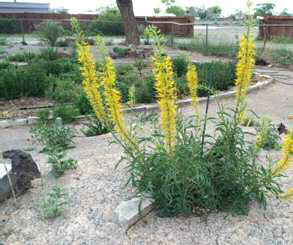
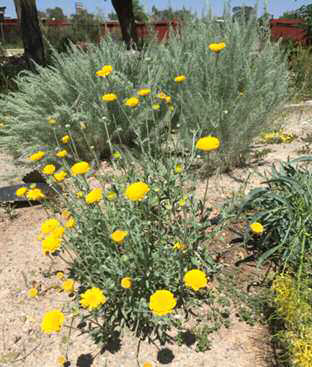
Last month I stressed the importance of adding large amounts of organic matter into our soil to garden successfully. That applies to plants that do not normally grow here like blue grass lawns, petunias & roses, tomatoes & lettuce.
Now I’m going to give the exceptions--the plants that are native to this area and adapted to grow in our dirt. You may have alkaline, sandy, or clay soil that has little to no decayed leaves, grasses, or other organic matter. When extreme drought tolerant plants grow in rich soil, with lots of water every day, they will shrivel up and die! They have developed clever strategies to survive the challenges of growing in New Mexico. These are the very plants that we should plant in the most difficult spots like the “hells strip” between the street and sidewalk.
What changes did plants make in their genetic makeup to allow them to survive in such harsh conditions?
1. Desiccation tolerance: To desiccate something is to dry it thoroughly. This process is found in moss. The next time you go into the Zuni Mountains find a rock with moss. Pour some water on it and watch it come to life.
2. Drought-Avoidance: Early leaf dropping helps plants conserve moisture during hot summer months. Another method is what desert flowers do after rain. These plants flower and put out seed as soon as possible after the start of monsoon season. They die at the start of the dry hot season. The seeds they produced are in the soil ready to start growing at the next wet season.
3. Drought Tolerance or Creative Adaptation: Plants have adapted to drought by many methods. Producing thick, leathery leaves cuts water loss and reflects heat from the plant. Small, thin leaves reduce surface area and hairy leaves shade and cool the plant.
Xeriscape – definition. A landscaping method developed especially for arid and semi-arid climates that utilize drought tolerant plants, mulch, and effective irrigation.
If you choose drought tolerant, native plants for landscaping around your home, things are simpler. You don’t need to alter your soil and you water less. Start by observing what is growing around you: your neighbors’ yards, wild flowers in the ditches, and the Botanical Garden in Albuquerque. Books by Judith Phillips, a New Mexico landscape designer, are excellent. Select the plants for each area. Plan for a low growing ground cover, perennial and annual flowers, grasses, bushes, and trees. If you plant cacti or succulents, make sure there is ample walking area around them so people and children don’t get stuck. All plants benefit from having generous holes dug. Even though a lot of drought tolerant plants have tap roots, they need to put out roots around the plant to bring water from side roots. Instead of digging deep, go down only to the depth of the ball of roots. Loosening the soil several times the diameter of the pot will give the new roots easy access to moisture away from the plant. Mulch for drought tolerant plants usually consists of more rock. Crusher fine and granite chips cool the ground which is what the plant needs. (Save your wood chips for your water hungry plants that need organic matter in the soil and on top of the soil). Most drought tolerant plants need regular watering every week if temperatures are above 100 degrees. There are extreme drought tolerant plants will need water for the first few months to develop root system and then they sail though months of no water. They are the original camel-plants.
If you are like most people, you want more than native plants. Break down sections of your land to high water and low water use. Add your organic supplements to where you want your highwater plants and put a drip system down so you can water each separately. These are just some of the tips for creating an attractive, low water, low maintenance yard. You can do it yourself or hire a landscaper on your whole yard or divide it into small manageable parts.
Edith Iwan is a Cibola-McKinley County Master Gardener who lives and works in Thoreau. As a Master Gardener she assists the County Cooperative Extension Service in providing accurate, research-based gardening information to county residents. If you have any gardening questions, please call the NMSU Cibola County Extension at 505287-9266 or NMSU McKinley County Extension at 505-863-3432