County to Provide Bottled Water, Potable Water Truck as Public Well Failure Disrupts Service
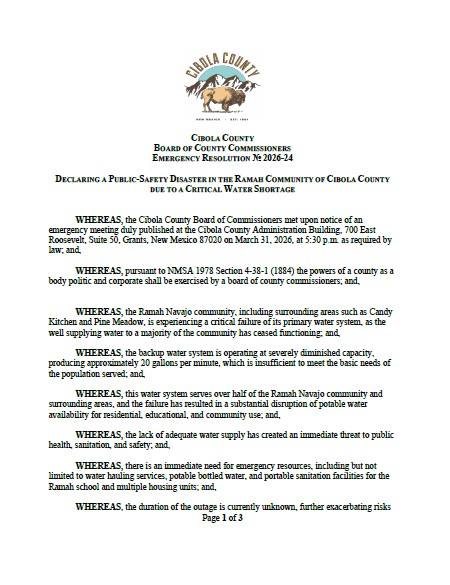
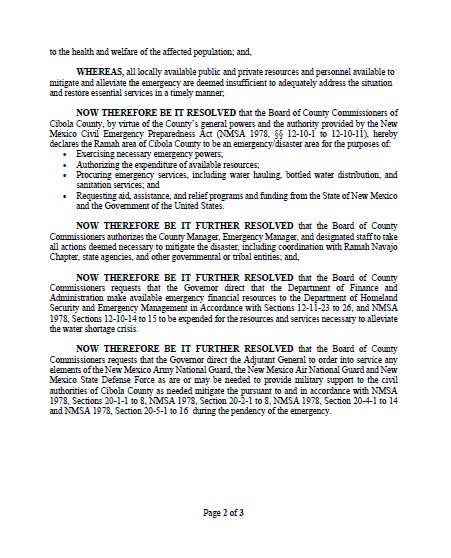
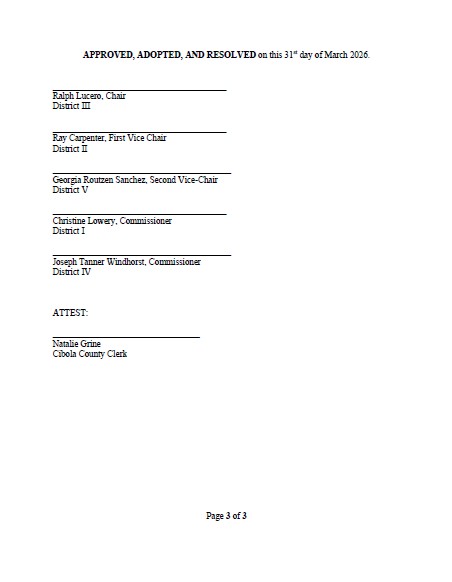
CIBOLA COUNTY, N.M. — The Cibola County Board of Commissioners Tuesday evening unanimously approved an emergency public-safety disaster declaration for the Ramah area after the failure of a public well system left parts of the Cibola Community without reliable water service.
County Commission action will see potable water made available at the Pinehill Fire Station.
County Manager Kate Fletcher said Wednesday morning that the failed well serves the Ramah area, including Candy Kitchen, Pine Meadows and nearby areas connected to that system. She said the county is now using emergency funds to provide bottled water and potable hauled water while Ramah Chapter works to resolve the problem.
“The chapter is working diligently to resolve this issue,” Fletcher said.
According to Fletcher, the county’s emergency response includes five pallets of bottled water and a potable water truck that will be available at the Pine Hill fire station. She said the county is working with Potco, a local water/sanitation company it has partnered with during similar incidents in the region, to make sure the water is safely secured and distributed in an orderly way.
Fletcher said the county expects the emergency water response to cost between $3,000 and $4,000 per week.
She said the county will take the situation on a week-by-week basis.
Under the emergency declaration approved Tuesday, the county is providing support as a public-safety measure. Fletcher said the county is not expecting reimbursement from Ramah Chapter and is not treating the assistance as a loan or temporary advance.
Instead, Fletcher said, the county is acting under emergency authority because the situation involves potable drinking water, sanitation and public safety.
Fletcher said Cibola County Emergency Management is assisting in the response and has helped connect Ramah officials with Navajo Nation Emergency Services.
She also emphasized that the problem is not a shortage of available water in the broader county, but a failure of public well pump infrastructure in the affected area. Fletcher noted that private wells in the area are still operating.
The county manager also said local businesses helped the county secure emergency bottled water without creating shortages for other communities in Cibola County.
Fletcher said the county took care to ensure there would be no bottled-water shortage in Grants, Milan or elsewhere while gathering emergency supplies for Ramah. She specifically thanked Walmart, Smith’s and John Brooks grocery stores for helping accommodate the emergency purchase and movement of water.
The emergency declaration followed an urgent request from Ramah leadership for potable water, bottled water and portable sanitation support. County documents approved Tuesday described the water outage as a public-safety issue requiring immediate action.
The response comes against a broader backdrop of dry conditions in Cibola County, where persistent drought has continued through early 2026. Local drought and water monitoring has shown gradual declines at Bluewater Lake, flat conditions on the Rio San Jose and little meaningful mountain snowpack support heading into spring . Still, county officials said the Ramah crisis itself is tied to well failure, not a collapse in regional water supply.
Fletcher acknowledged the strain emergency situations place on county staff.
“I have sleepless nights, but I have a good team around me,” she said. “This work, it would not be possible - it’s not me. It’s the team I have around me.”
As of Wednesday morning, the county said emergency water support was being set up and would remain available for residents in the affected Ramah area while repairs and longer-term solutions are worked out.