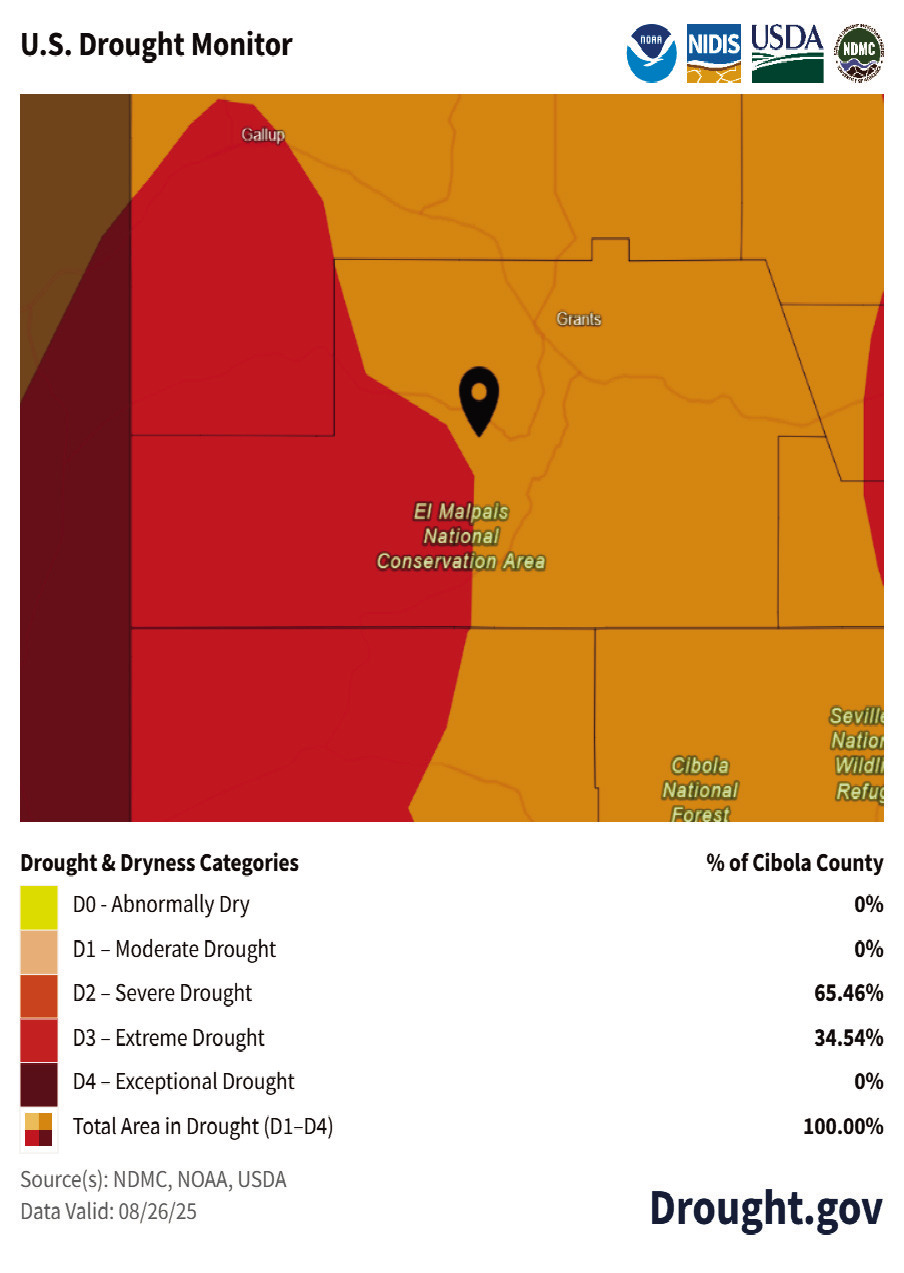
CIBOLA COUNTY, N.M. — As of the end of August, drought conditions across Cibola County remain unchanged. Despite spotty late-summer rainfall in certain parts of the region, the U.S. Drought Monitor reports that 100 percent of the county remains in drought, with no measurable improvement over the past week or month.
According to data valid as of August 26, 65.46 percent of Cibola County is experiencing Severe Drought (D2), while 34.54 percent is classified as Extreme Drought (D3). There are currently no areas considered Abnormally Dry (D0), Moderate Drought (D1), or Exceptional Drought (D4).
These conditions affect all of the county’s estimated 27,213 residents and continue to strain agricultural land.
State drought estimates indicate that 448 acres of hay and 30 acres of haylage are under drought conditions in Cibola County. Roughly 10,281 cattle and 3,026 sheep are also grazing on land impacted by dry soil and limited vegetation growth.
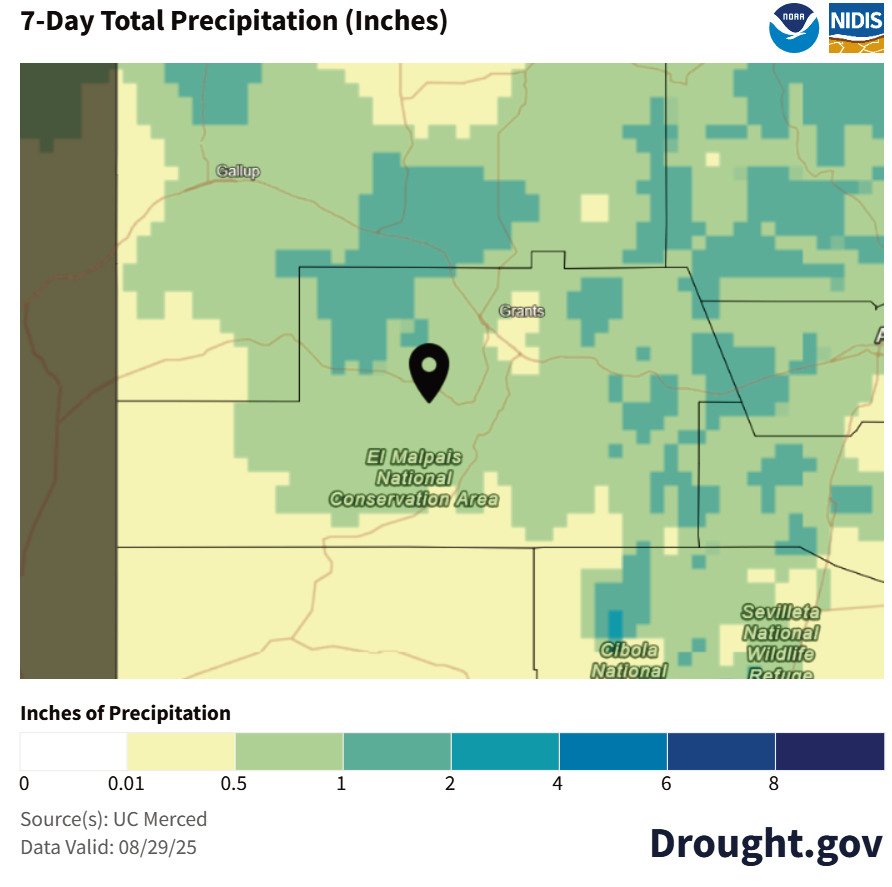
Precipitation totals for the past week show a patchwork of rainfall, ranging between 0.5 and 2 inches in parts of the county, especially near Grants and El Malpais National Conservation Area. The moisture has not been widespread or sustained enough to shift drought categories.
Cibola’s water outlook remains complicated. On one hand, June 2025 ranked as the 31st wettest June in 131 years, finishing 0.36 inches above average rainfall. But broader annual trends paint a drier picture.
From January through June, the county saw 1.24 inches less precipitation than normal, placing 2025 as the 43rd driest start to the year in more than a century.
New Mexico’s drought mapping platform continues to track these changes week by week. And while some of the data sets may appear inconsistent, particularly in agricultural acreage classifications, overall indicators confirm a persistent and challenging dry season for the region.
With the monsoon season tapering off and fire restrictions still in effect across much of the area, local officials and residents alike remain on alert—watching the skies, the soil, and the rivers— for signs of meaningful change.