

Protests at Pinyon Mine, scrutiny for Roca Honda
GRANTS, N.M. – Energy Fuels is sitting on top of one of the largest undeveloped uranium deposits in the United States, its Roca Honda Mine. Interest in nuclear energy is on the upswing. Uranium prices are rising. Waivers that allow the United States to continue importing uranium from Russia expire in 2027. Nuclear plants will be out of fuel. The stars are aligned.
Seizing the day, Energy Fuels Resources Inc., submitted a revised Mine Operations and Reclamation Plan along with a Plan of Operation to the New Mexico Mining and Minerals Division. Comments and requests for a public hearing are due 30 days after the May 20 publication of the public notice in the Cibola Citizen.
“Permitting of the Roca Honda Project has kind of come and gone several times over the years, so now that uranium is such a huge issue for the United States from a national security and energy security standpoint, this project is going to take some increased importance,” Curtis Moore, vice president of Marketing and Corporate Development for Energy Fuels, said.
“What’s interesting is that we go from under the previous administration where everything was just a slog – it was very, very difficult to get anything done – to now in the current administration, they want everything done yesterday. So going from stop, stop, stop to go, go, go, that doesn’t happen overnight,” he said.
Energy Fuels doesn't want to cut corners because if corners are cut it can expose the project to injunctions and lawsuits from activists and NGOs, Moore said, “which we know are just waiting in the wings to try to stop all these projects.”
Protesters respond
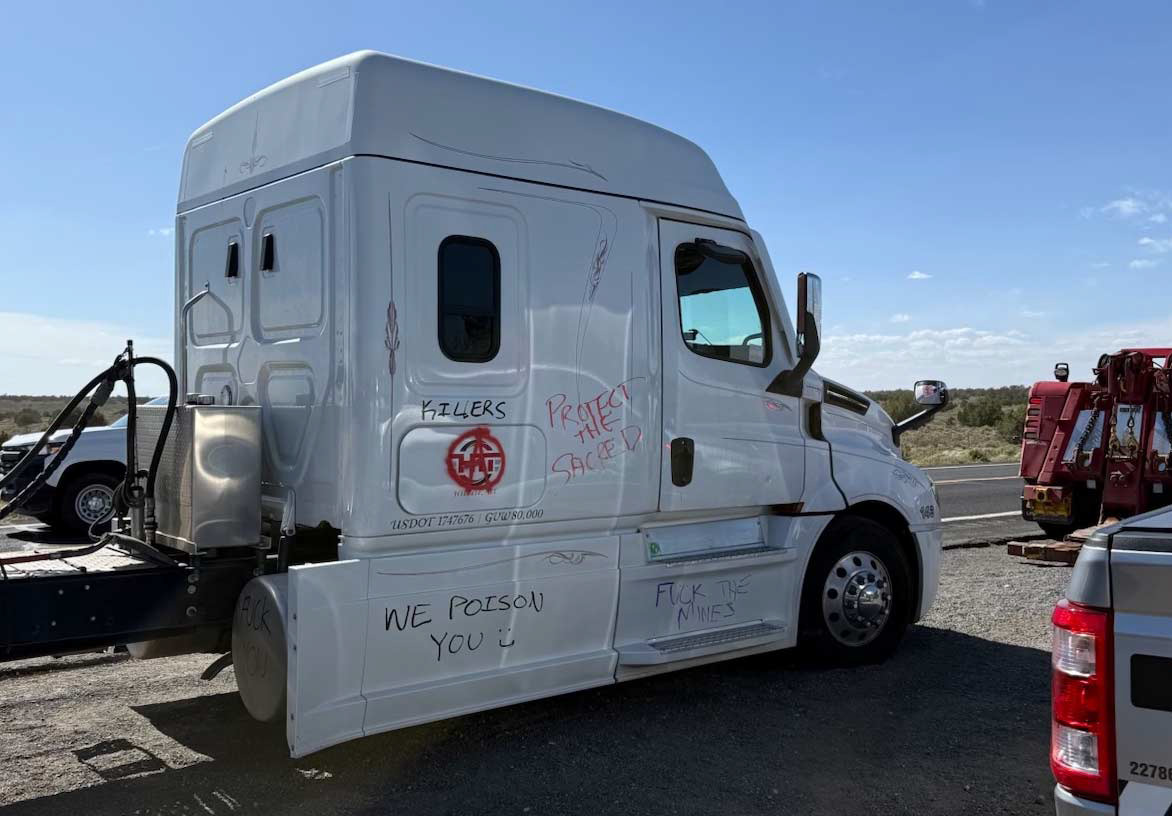
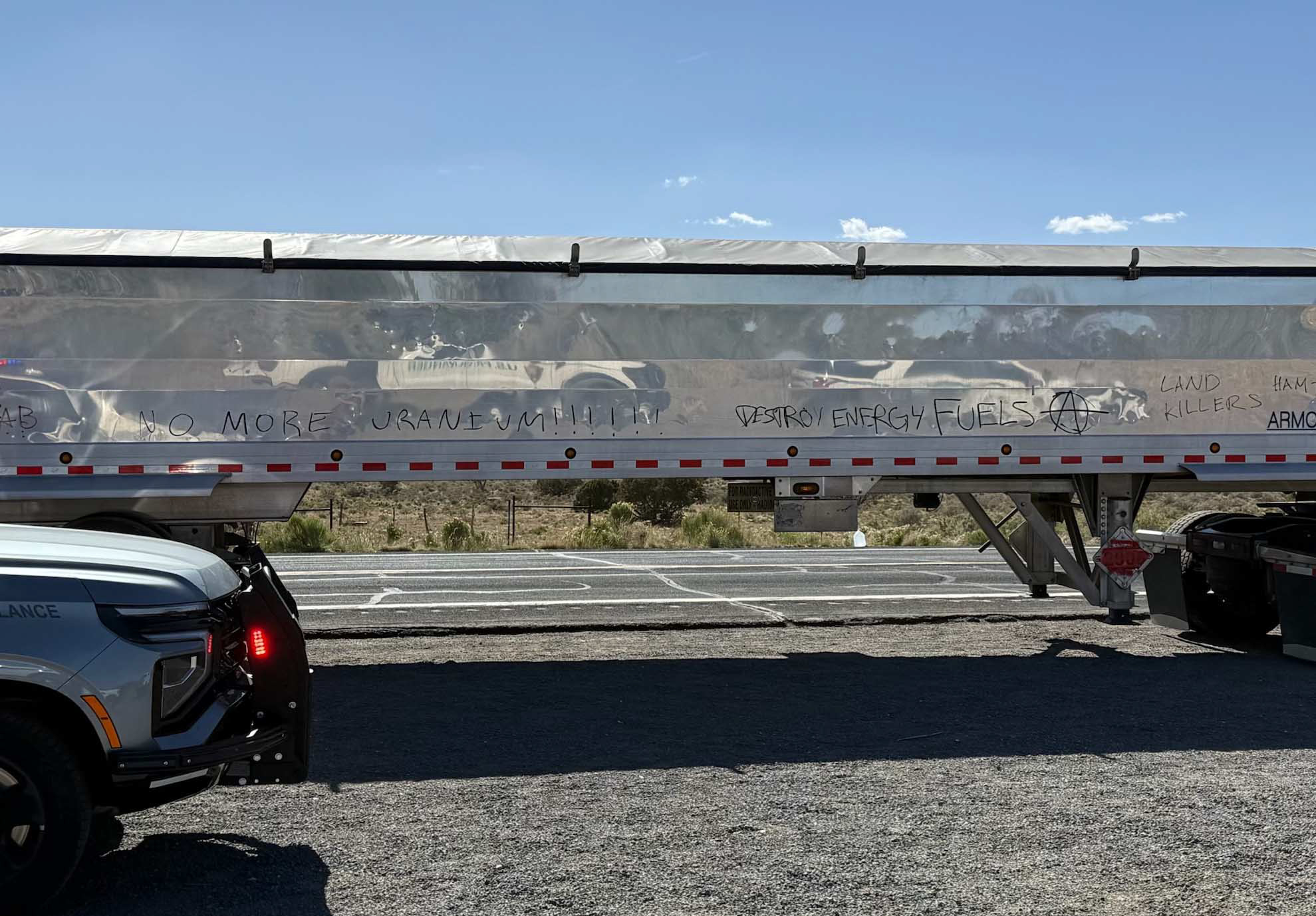
A May 17 protest by activists along state Highway 64 near Energy Fuels' Pinyon Plain Mine in Arizona is currently being investigated by Arizona Counter Terrorism Information Officials, according to Moore.
“Usually we’ll have a protest and there might be a couple dozen people out there waving signs – and it’s peaceful. We support First Amendment protests. That’s totally fine. We have no problem with that,” he said. But this one was different. Well over 100 protesters showed up, and this time there was violence.
On that Sunday afternoon one of the empty haul trucks was returning to the mine from Energy Fuels' White Mesa Mill near Blanding, Utah, to get ready for the next day’s transport when he encountered the protesters.
“As the truck was driving up the highway, the activists threw rocks and logs out into the road,” Moore alleged. “So the truck driver stopped and the activists chocked his wheels, disabled his brakes, slashed his tires. They spray-painted his mirrors and his windows so he couldn’t see. They started tagging the truck, they started hitting it with rocks, damaging the truck in other ways. They tried to get into the cab. They actually broke the door handles. Luckily, his lock held.”
Moore questioned what the activists might have had in mind for the truck driver and referred to a website, stopthem.global, which identifies Energy Fuels as “Your Enemy” and encourages readers to “Take any and all necessary actions against Energy Fuels' transport, hauling, extraction, and milling.”
A May 14 post from saguaros.noblogs.org issued a call “to all anti authoritarians, land defenders, and lovers of the earth” to join them in a rally to shut down the Pinyon Plain Mine. Moore said it appears there were some “Antifa-adjacent radicals” that came in from outside the area.
Scary moments
“I don’t know what they were going to do to our driver. He was obviously scared out of his mind. Local law enforcement was there but they were outnumbered so they had to call in all kinds of backup. They found a fairly large encampment of people in the forest nearby, which is kind of where they all staged this. They found guns, knives,” Moore alleged.
Ore haulers must cross the Navajo Nation when traveling from the mine to the mill. The Navajo Nation and Energy Fuels recently worked out an updated transportation agreement which strictly enforces inspections for radiation and regulates the days and hours ore trucks can pass through the reservation.
Stephen Etsitty, executive director of the Navajo Nation Environmental Protection Agency, said that based on anecdotal reports, protesters immobilized the truck with the logs and rocks and then “went to town” on the truck with spray paint. “I think a couple people crawled up on the cab and were harassing and threatening the driver who was inside the cab.”
Etsitty said he was still waiting to see an official report from Coconino County Sheriff's Office. Public information officer Jon Paxton said late Monday that the case had been turned over to the Arizona Department of Public Safety. Brienne Pettit, public affairs officer for Kaibab National Forest, also deferred to the Sheriff’s Office and Public Safety.
“All I can say is I was informed late in the day on Sunday that these events took place and we did have some no haul days the following week to give the drivers time to recover from the incident,” Etsitty said. “There were three days of no hauling after the incident – Monday, Tuesday and Wednesday – where the company decided not to transport, but then everything got back to schedule on Thursday.”
“That’s what we’re up against,” Moore said. “This is not the first time we’ve seen this type of activity. We call on the anti-nuclear and anti-mining NGOs to clearly renounce violence and stop threatening people and property.” Transport has resumed under highly elevated security. Back to business
Michael Neumann, a consultant for Energy Fuels on the Roca Honda Mine Project, said the company approached the Forest Service about a year ago and expressed its interest in picking up where they left off on the Environmental Impact Statement. After discussion, it was determined that the best way to go would be to revise the draft EIS, as it was done around 2012.
“So we started down the path with ‘Let’s redo the draft EIS’ and about that same time Energy Fuels applied for and received a FAST-41 designation” from the government,” Neumann said. “The current plan is try and get a notice of intent to prepare a revised EIS out in June.
“They have a schedule laid out on the FAST-41 dashboard that shows us getting to the point of having an EIS done by June 2027, which is a fairly ambitious schedule, but given the tremendous amount of work that’s already been done on Roca Honda both in terms of all the site characterization work previously, we think it’s a reasonable target,” Neumann said.
A contractor, SWCA, has been selected to prepare the EIS under Forest Service supervision. “They’ve done work for most of the uranium mining companies out there at one time or another and are familiar with most of the mines in and around Grants,” he said.
The EIS will result in a Record of Decision on whether the Forest Service will approve the project. Concurrently with that, Neumann said they are restarting the permitting process with the Mining and Minerals Division and the New Mexico Environment Department which issues the groundwater discharge permit. It also will be resubmitting a revised permit application to them sometime before the end of the year. Roca Honda also will need permits from the Army Corps of Engineers and U.S. EPA.
There is no need for miners to start sharpening their pick axes yet. Construction on the conventional underground mine is expected to start in 2028, at the earliest, Neumann said, and production in 2030-31.