
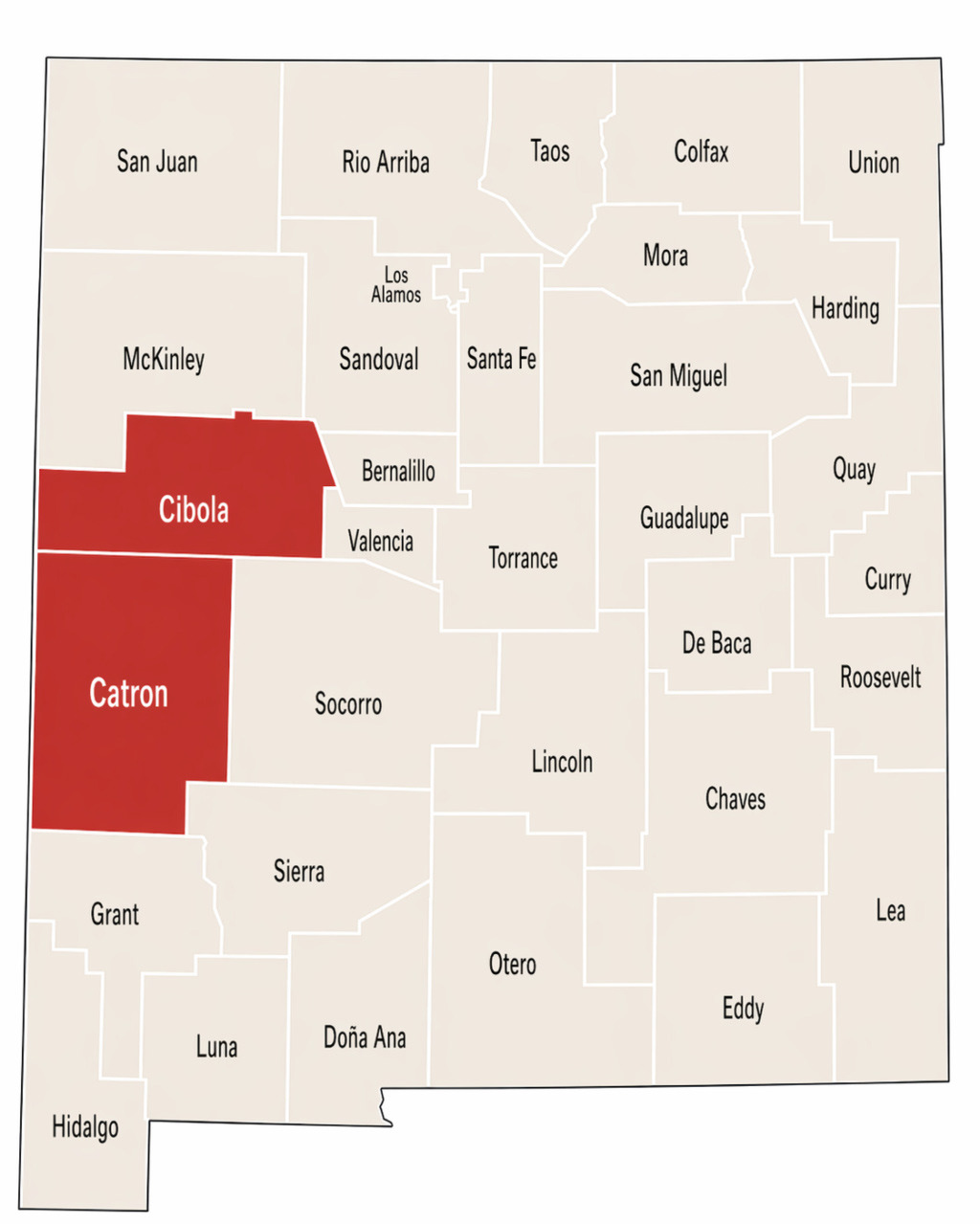
County officials in Western New Mexico say the return of Secure Rural Schools money will help support road maintenance, local schools and wildfire preparedness
CIBOLA COUNTY, N.M. – A federal funding program that supports roads, schools and wildfire- prevention efforts in rural counties with national forest land has been restored after a lapse last year sharply reduced payments.
The program, known as Secure Rural Schools (SRS), was created by the U.S. Congress to help counties and school districts that contain large amounts of tax-exempt federal forest land. The rural county receives the funding and disperses it to school districts within the county.
For the fiscal year July 2024 through June 2025, the US Congress failed to reauthorize the funding, leaving some rural counties scrambling to meet their needs. After a lengthy Congressional battle and receiving a signature from US President Donald Trump in December, New Mexico counties are seeing SRS funding flow again.
On April 14, the U.S. Forest Service announced it would issue $248 million in Secure Rural Schools payments for 2025, saying the money would support public schools, local roads, wildfire preparedness and other essential services in rural communities.
For rural counties in Western New Mexico, the return of SRS has been welcomed.
In Cibola County, the program’s return matters to road budgets which were strained after funding lapsed.
Because Congress did not reauthorize Secure Rural Schools in time for FY2024, Cibola saw its payments drop sharply. In Cibola, County Manager Kate Fletcher said the county and school district normally receive about $466,000 combined through the program, with about $233,000 going to the county and about the same amount going to schools. Last year, Fletcher said that funding fell severely, and only about $20,000 for the county and $20,000 for schools was dispersed to Cibola.
Fletcher said Cibola County budgets its share of SRS funding through the road department.
“This year, every year – we usually decide to put it in the roads so our crews can mow the grasses, make sure that there are no fuels on our roads,” Fletcher said, explaining that the county uses SRS funds for rural road-related work, including education and outreach for drought and fire prevention purposes.
She said the county had to adjust quickly when the funding dropped.
“We brought expenditures down and we used other funds,” Fletcher said. During this lapse of funds, Cibola County was able to finish construction of a bridge that had previously suffered a hairline fracture. Fletcher said this was possible because the county responded with financial responsibility and fiscal restraint after learning Congress had not reauthorized the program and the expected revenue would not arrive at its normal level.
“It’s all about management,” Fletcher said.
The county is now budgeting about $233,000 for its share this year because the program has been reauthorized and officials expect funding to return to more typical levels, according to Fletcher.
Catron County officials there.
Catron County Manager Deborah Mahler said the majority of Catron County’s Secure Rural Schools funding goes to the roads department, which maintains about 905 road miles across three road districts. Mahler said the county was in “dire straits” without the money and called it essential to keeping rural roads in shape.
Mahler said the county’s limited property tax base and large amount of public land make programs like Secure Rural Schools especially important.
“It’s the only way these roads stay maintained,” Mahler said, explaining that Catron County’s largely dirt-road system requires constant grading, fuel, heavy equipment maintenance and staffing. She cited rising fuel costs, with diesel at almost $5 a gallon, as the importance of this funding.
Mahler said the funding is especially important in Catron County because of the county’s small property tax base and large amount of public land. She said about 80% of the county is public land, making federal land-related revenues like SRS especially important to local government.
For Western New Mexico, the return of Secure Rural Schools funding will affect the condition of rural roads, the support available to local schools, and the ability of counties with large amounts of federal land to keep up with basic responsibilities like law infrastructure upkeep.
In Cibola County, officials say the money helps support road maintenance and wildfire education. In Catron County, officials say without Secure Rural Schools funding to keep the road system operational, the county would struggle.