
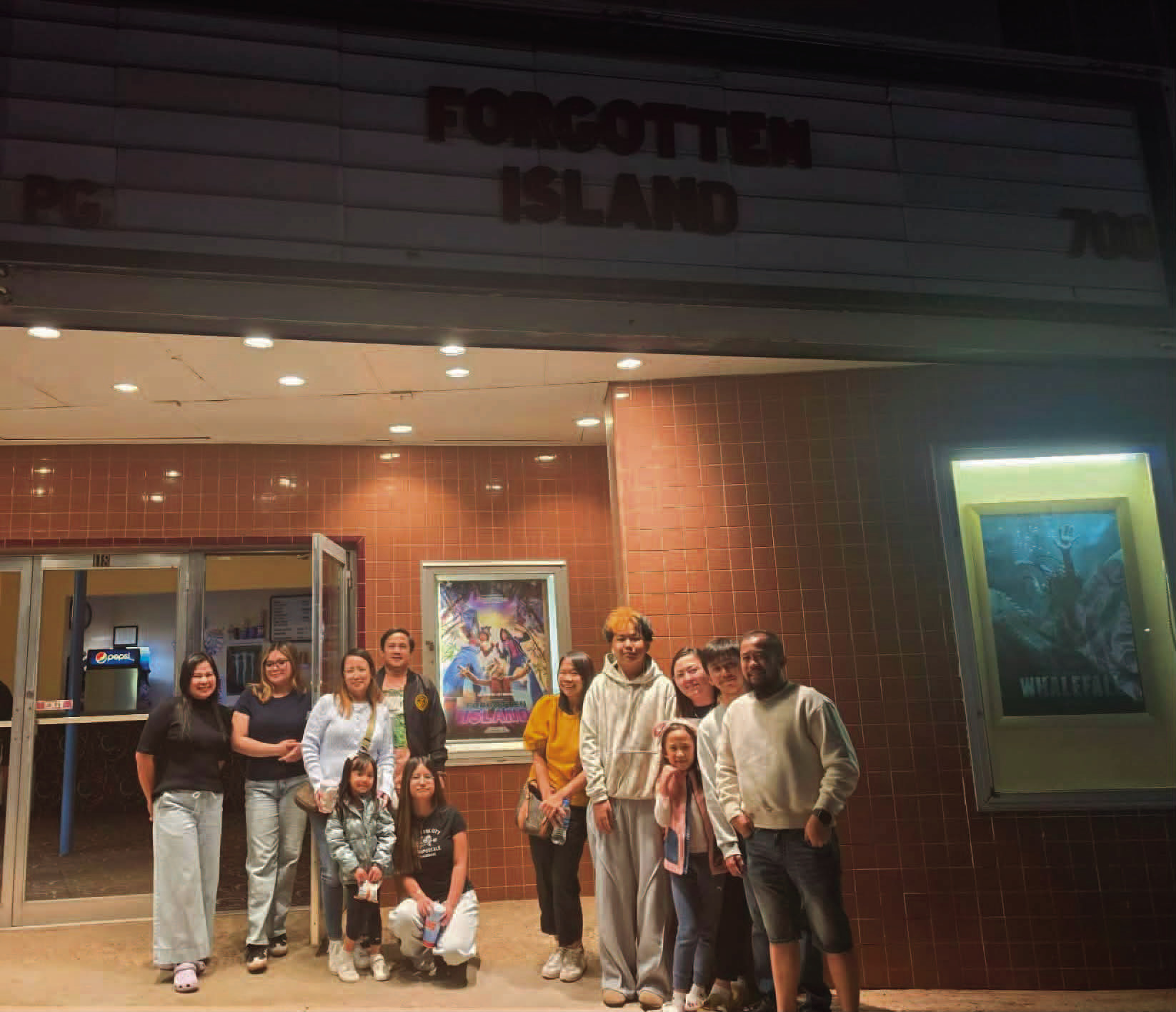

I took my family to West Theatre in Grants for the first time. It was my third visit and my older son’s second. My first visit was with friends, and the second was with my older son for “Five Nights at Freddy’s”. My friends Arnold and Connie Lovato are regulars who support our local theater weekly.
I thought we would simply watch Dream-Works’ first Filipino-inspired animated film, “Forgotten Island”, but it became personal.
My older son grew up reading about Philippine mythical creatures. My friend Dr. Jolo Tamayo, who studied at the University of Debrecen in Hungary, passed down a book, Philippine Myths, Legends, and Folktales. His dissertation “Tungkol sa akin sa Sayaw ng Pagbati sa Angono, Ibaan at Parañaque” examined the aspects of practice, cultural memory, and ritual.
I also remember asking my son to read a few editions of “Trese”, a Filipino graphic novel about a detective investigating supernatural crimes rooted in folklore, which I discuss in my Philippine Literature classes. He struggled to match what he saw with what he knew about these creatures. I sensed his discomfort during a few scenes, but he kept watching.
Meanwhile, I laughed at some parts, and he would give me an OK sign. That meant he was having fun, too. The movie could overwhelm my younger son, but popcorn and Sour Patch candies helped. He especially loved the bright, colorful Sarimanok. I wish I could find more picture books for him about this.
The food felt warmly familiar.
I tried not to think too much like a teacher while watching, but I couldn’t help remembering “An Earnest Parable” by Filipino Australian writer Merlinda Bobis. The piece appears in her award-winning collection “White Turtle”. Her short story explores the tongue in relation to language, food, and migration, and how these shape our sense of belonging.
As Filipino teachers here in Grants, food is one way we share a part of ourselves. Representation is important, even if not always easy to achieve. Sometimes, we make space for ourselves simply by showing up at the table and bringing pansit and lumpia. Yes, the taste of Filipino food will always be one of the things we carry with us. After all, the tongue remembers in ways words sometimes cannot.
When we got home, my older son and I talked about the image of Jesus behind the food and famous lechon in the movie’s send-off scene for Raissa. I thought it was funny, and I was sure many Filipino Americans would also find it amusing. But my son said he was offended. To him, the image symbolized Spanish colonization and the long, painful struggle for Philippine independence.
So I had to explain Pinoy humor. We would always agree to disagree, and I understand.
I thought of my friend Liby Limoso, whose work explores ways to preserve and reinterpret the Sugidanun, the epic narratives of Panay. He is currently in Scotland, previously in London, and showcasing his “Tuos Panay Mythology Puppets”. His work reminds me that retelling folklore takes research and respect for the communities that keep these stories alive. These stories can change as they reach new audiences, but we should be careful about what we change.
I miss home. I miss the sound of Filipino laughter. I miss people who understand the little things without explanations. Back home, watching a Filipino movie would have been ordinary. Here, it felt like something more.
I remembered an exercise from my NYU Theatre of the Oppressed class. Place your palm close to your face. What do you see? A blurry image, right? Now move it a foot away. What do you see? The lines of your palm become clearer.
Maybe understanding your country is like that. Sometimes, you need to step away to see it more clearly, or perhaps to appreciate it more.
Overall, it was a fun time with my family. I took pictures of West Theatre and our family in front of the movie poster. My friends wanted to see the movie, too, so they went the following day. They were glad to see familiar characters, hear Francis M’s rap song, and spot Filipino food on screen, the same food they see in their own kitchens. Like my husband, they felt emotional during the sad and happy moments between Lola Fatima and Jo. They sent me their photo, and I couldn’t leave it out of this article.
We will keep supporting our local theater and its friendly owner, just as we will continue to support Filipinos wherever they may be around the world. For now, it may not yet be the time for us to find our way back to the Philippines. But wherever we go, we will not forget that we are Filipinos.