
Diego Lopez, Editor
Editor’s Note: The final vote for S. 356, the Secure Rural Schools Reauthorization Act of 2025 was 399-5. It passed around 4:50 p.m. mst on Dec. 9.The bill heads to Pres. Trump’s desk for signature.
GRANTS, N.M. – A federal program that rural counties like Cibola have relied on for more than two decades to keep school buses running and back roads graded is finally moving again in Congress after a year-long lapse in funding.
On Tuesday afternoon, the U.S. House of Representatives began debate on S. 356, the Secure Rural Schools Reauthorization Act of 2025, with a recorded vote requested and postponed for later in the day. An identical version of the bill passed the U.S. Senate by voice vote on June 18. If the House approves the bill and it is signed by the president, Secure Rural Schools (SRS) payments would be reauthorized and could begin flowing again to counties across the West, including Cibola.
SRS funding expired in 2024, leaving rural counties that are heavily made up of federal land scrambling to fill holes in their road and school budgets. Unlike communities with large private tax bases, counties with extensive national forest lands cannot collect property tax on much of their territory. SRS was created to help close that gap.
What This Means for Cibola
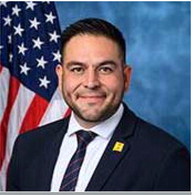
In August, U.S. Rep. Gabe Vasquez, who represents Cibola County in New Mexico’s 2nd Congressional District, met with Cibola County Manager Kate Fletcher, local firefighters and EMS personnel at Fence Lake to hear concerns about the lapse in SRS funding and other rural infrastructure needs.
According to Vasquez’s office, county leaders at Fence Lake and Ramah Navajo stressed two themes over and over: Road maintenance issues – school buses, ambulances and fire trucks rely on county roads that are often the only way in or out of isolated communities. When SRS payments stalled, local officials warned that basic grading and maintenance became harder to sustain.
Emergency communications issues – at Fence Lake, local EMS and fire personnel described “blackout areas” with no cell service and aging radios, raising fears that people could die in an emergency simply because responders could not be reached or dispatched in time.
Fletcher told the congressman that reliable communications and safe roads go hand-in-hand in rural public safety and that SRS has been a critical piece of the funding puzzle for both.
The program is also important for rural school districts across western New Mexico.
At a roundtable in Quemado, school and county officials from Catron, Sierra, Grant and Cibola counties told Vasquez that SRS helps pay for classroom staff and services that would otherwise be difficult to sustain in very small districts.
The Secure Rural Schools and Community Self-Determination Act was first enacted in 2000 to stabilize funding for timberdependent counties and school districts with large amounts of national forest land. Since then, Congress has reauthorized the program several times, often at the last minute, leaving rural communities uncertain from year to year.
For the current bill, the path has looked like this:
• Feb. 3, 2025 – S. 356 is introduced in the U.S. Senate and referred to the Committee on Energy and Natural Resources.
• June 18, 2025 – The Senate discharges the committee and passes S. 356 by voice vote.
• June 23, 2025 – The bill is received in the House and “held at the desk,” meaning it was not immediately sent to a specific committee for action.
• Week of Dec. 8, 2025 – House leaders schedule S. 356 for consideration under “suspension of the rules,” a fast-track process typically used for broadly supported bills.
• Dec. 9, 2025 – The House begins up to 40 minutes of debate on S. 356. A recorded vote is requested and postponed.
On Tuesday, the House Press Gallery reported that debate on the bill had begun shortly before 1 p.m. Eastern, with a roll-call vote to be taken at a later time. A final outcome was not yet available as of press time.
The House could vote on S. 356 as early as Tuesday evening or later this week, depending on how leaders schedule the postponed recorded vote. Because the Senate has already passed this version of the bill, House approval would send it directly to the president’s desk.
Cibola County and local school leaders are watching closely. If the reauthorization is successful, they say, it will provide some badly needed stability for rural budgets that have been in limbo since last year’s lapse.
The Cibola Citizen will continue to follow the bill’s progress and report on what the final outcome means in practical terms for Cibola County roads, schools and emergency services.