
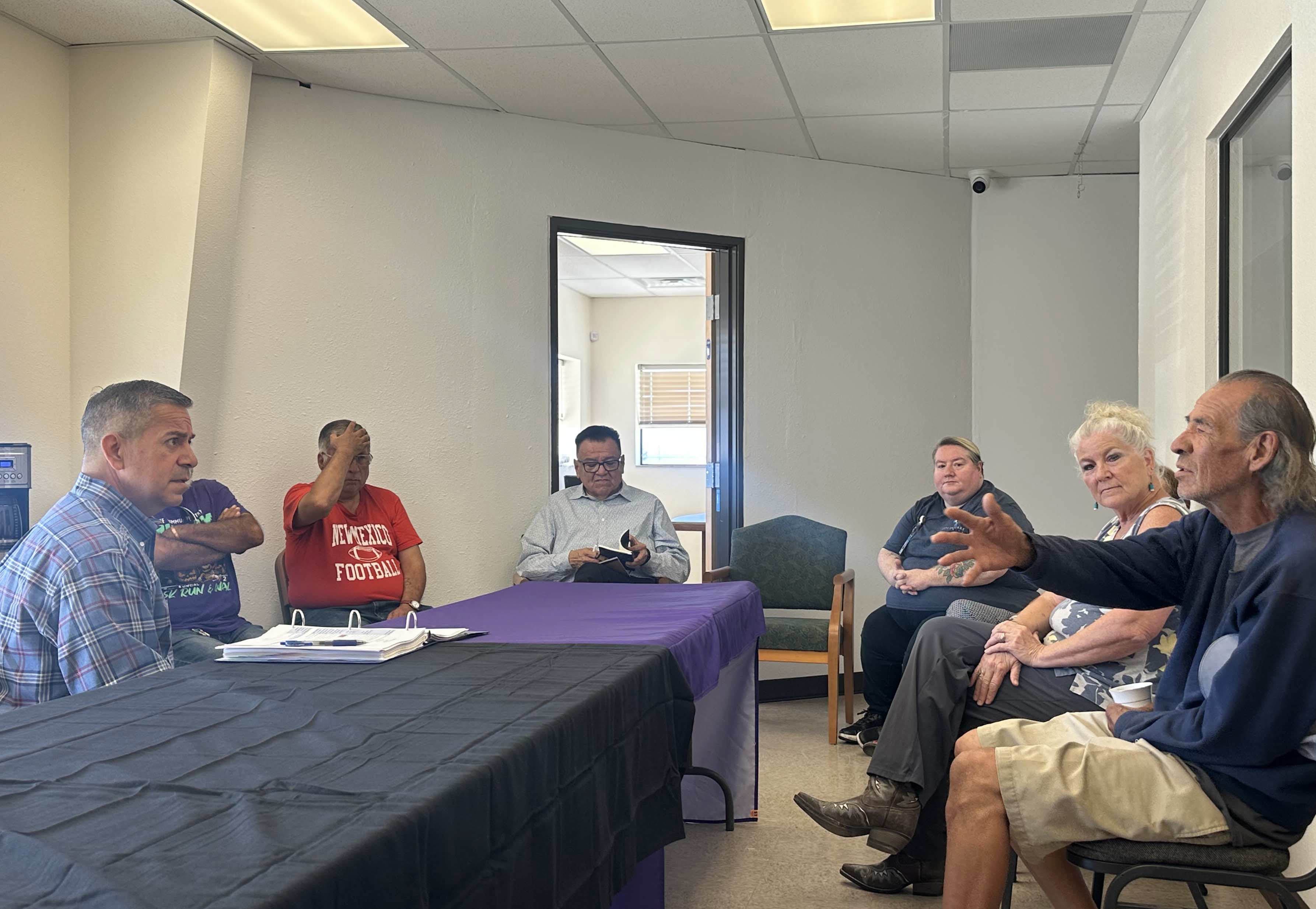
Senator hears from families, food providers about rising costs and nutrition assistance
GRANTS, N.M. – U.S. Sen. Ben Ray Luján visited the Grants Community Pantry Thursday, August 20, meeting with local families, food assistance workers and service providers as changes to the Supplemental Nutrition Assistance Program, commonly known as SNAP, begin raising concerns across rural New Mexico.
The visit came as Cibola County continues to struggle with high levels of poverty, particularly among children. Recent Census and KIDS COUNT data indicate approximately 41.6% of children in the county live below the federal poverty line – roughly four in every 10 children.
Luján, a member of the Senate Agriculture Committee, said the effects of reductions to nutrition programs extend beyond individual households to grocery stores, farmers, ranchers, schools and health care systems.
“I’m very concerned with the devastating cuts that we just saw,” Luján said, adding that lawmakers should look for ways to improve the effectiveness of programs rather than simply eliminate assistance.
Luján told those gathered that food assistance has long been personal to him. He described growing up on a small farm in northern New Mexico, where his family raised much of its own food and shared produce and meat with relatives and neighbors.
Though his family did not have much money, he said, they had access to food.
That experience, Luján said, has helped shape his approach to federal nutrition policy.
During the discussion, several local residents described what food assistance means inside their own homes.
One Grants-area mother, Brandy, told Luján she has five young children and that support from the pantry helps her family make ends meet. She also described hectic mornings getting several children to school and the importance of school breakfast programs.
Luján said nutrition programs at home and in schools are closely connected to children's ability to learn.
“Can you imagine if you don’t eat?” Luján asked. “How are you going to learn or how are you going to do your job?”
Pantry representatives also pushed back on the perception that SNAP primarily supports adults who are unwilling to work, noting that benefits provided to parents are often feeding children and that many pantry clients are employed but still struggle with the cost of food, housing, fuel and other necessities.
One participant told Luján there is often a disconnect between public criticism of adults receiving SNAP and the children or elderly family members those adults are caring for.
Luján agreed, saying families in New Mexico frequently live in multigenerational households and depend on one another for care.
The conversation also turned to the effect of food assistance on rural businesses.
Luján warned that reductions in SNAP spending can have consequences for small grocery stores operating on already- thin margins, particularly in rural communities where a larger portion of grocery revenue can come from SNAP customers.
“Once one of these stores closes, we may never get them back,” he said.
That concern is particularly relevant in western New Mexico, where residents in some communities already travel significant distances for groceries, medical care and other basic services.
Pantry representatives said transportation remains one of the largest barriers to food access in the region. The Grants Community Pantry operates 14 mobile distributions, including service to reservation and outlying communities where residents may otherwise have difficulty reaching food assistance.
Officials and pantry representatives also described rising operating costs.
They said grants intended to help food banks expand have increasingly been absorbed by higher fuel, shipping and food costs, limiting how much additional food can actually be purchased and distributed.
“For every dollar that we spend on something else, we cannot provide ingredients,” one pantry representative told the group.
The discussion included representatives familiar with New Mexico’s SNAP program, who explained that federal “error rates” should not automatically be equated with fraud.
Errors can occur when a recipient does not quickly report a change in rent, household circumstances or address, they said, and can result in either an overpayment or an underpayment. Participants emphasized that deliberate fraud is handled separately.
Luján said lawmakers should distinguish between fraud and administrative errors when debating the future of SNAP.
“If there needs to be an effort to make sure that this program runs the way that it’s intended to run,” Luján said, investments in quality control, case monitoring and better tools for caseworkers should be part of that discussion.
He argued those improvements could be made without reducing assistance for families who legitimately need food.
Several participants also warned that larger effects may still be ahead for New Mexico as additional eligibility and administrative changes take effect.
For Cibola County, where the overall poverty rate is about 25.9% and childhood poverty is substantially higher, local providers said even relatively small reductions in household food budgets can quickly push families toward pantries and other emergency assistance.
Luján said communities ultimately pay for food insecurity one way or another, including through increased health problems, emergency medical care and other social costs.
Rather than treating nutrition assistance as an isolated program, he said policymakers should consider its effect on health, education and economic stability.
“Food is medicine,” Luján said.
Before leaving Grants, Luján said the conversation had given him several ideas to take back to Washington and encouraged pantry workers and local service providers to continue sharing suggestions about how federal programs could better work in rural communities.
The senator also took a moment to talk about Cibola County itself.
Asked about his favorite part of the county, Luján laughed and called the question “very unfair,” saying he enjoys both spending time with friends in Grants and escaping into the area’s rural landscapes.
He said he has mountain biked and hiked locally and singled out Mount Taylor as one of his favorite places.
“If I get a few hours,” Luján said, “I just go get lost.”