
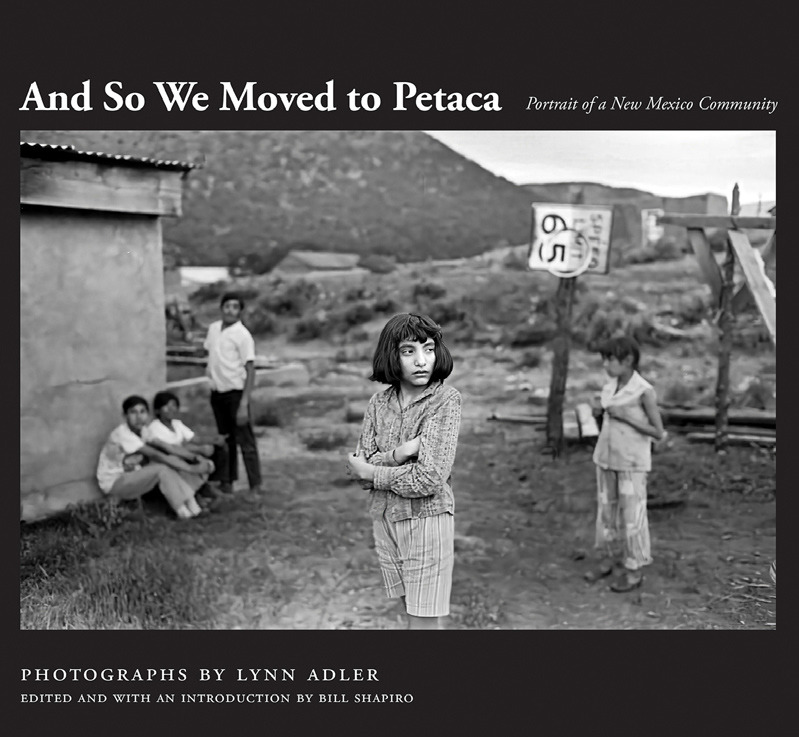
Title: “And So We Moved to Petaca, Portrait of a New Mexico Community” Author: Lynn Adler Introduction and author interview: Bill Shapiro Published: 2026 ISBN: 978-0-8263-6963-5 Publisher: University of New Mexico Press, unmpress.com Paperback, 143 pages, 108 black-and-white photographs
“What an astonishing thing a book is. It’s a flat object made from a tree with flexible parts on which are imprinted funny dark squiggles. But one glance at it and you’re in the mind of another person, maybe someone dead for thousands of years. Across the millenia, an author is speaking clearly inside your head, directly to you.” Carl Sagan, 1934–96, American astronomer, planetary scientist, science communicator, and a pioneer in exobiology.
This book captures day-to-day life in a small village in the early 1970s. It highlights how a handful of Anglos were welcomed into a traditional Hispano community without the xenophobia that was common in many communities.
Racial discrimination has been widespread in this country since prior to the Revolutionary War. Social injustice was rampant following the post-Civil War Reconstruction era. Racial discrimination and inequality in voter registration triggered widespread activism that gained momentum during the 1940s and the mid-1950s.
The 1954 landmark Supreme Court decision declared school segregation illegal. Ten years later federal civil rights legislation outlawed voter discrimination based on race, color, religion, gender or national origin; ended segregation in public places like hotels, restaurants and theaters; and created the Equal Employment Opportunity Commission to end employment bias.
Ethnographic studies was an unknown field and female photographers were a rarity when Lynn Adler inherited her mother’s camera and dark room equipment in the late 1960s.
In 1970 the 28-year-old novice photographer packed up her possessions including her mother’s vintage 35 mm Olympus camera, rolls of black-and-white film, loaded everything into her red-and-white VW Bus, and drove from San Francisco to New Mexico.
She was reacting to the violence of the 1960s: the assassinations of Rev. Martin Luther King, Jr. and presidential candidate Senator Robert F. Kennedy, the Vietnam War which sparked widespread civil unrest that often exploded into physical confrontations, the Watts riots in Los Angeles and surrounding areas (a reaction to the L.A. police department’s racist and abusive practices), and the increasing poverty, discriminatory employment practices, and residential segregation in urban areas.
Adler discovered a whole new world in Petaca, a tiny village of fifty families in the Sangre de Cristos Mountains in northern New Mexico.
This region was the home of the Capote Utes and Jicarilla Apaches for thousands of years until Hispano immigrants brought their traditional farming and ranching lifestyles to the Southwest in 1598. Between 1692 and 1821 Spain issued land grants to those who settled in the Province of Nuevo México.
The 1848 Treaty of Guadalupe Hidalgo ended the Mexican-American War; Mexico ceded more than 525,000 square miles of land which became California, Nevada, Utah, New Mexico, most of Arizona and Colorado, and parts of Wyoming and Kansas.
Adler learned that after finalizing the treaty, the U.S. government “claimed tons of land for the ‘public domain’ and families who had farmed and ranched their land for generations lost it [their land].” They were unable to provide U.S. authorities with land grant paperwork to prove ownership.
In the 20th century a mica mine was the main source of income for many households in Petaca until the mill closed in the 1950s. Later families turned to logging and working in sawmills but the timber industry was shortlived. Many households then returned to ranching and subsistence farming. Everyone’s livelihood was dependent on maintaining the acequia, a communal irrigation system, according to Adler.
This book records some of those who befriended the long-haired young people who had emigrated from San Francisco and New York City. The newcomers joined in community events and learned homesteading skills from families who had lived there for generations.
“I found that approaching the locals with my camera made it easier for me to engage them, brought me closer to them,” explained Adler.
She got to know Jesusita Martinez, the village curandera (traditional healer) who was born in 1886; Santiago Roybal, one of the few English-speakers who liked to discuss politics; and Louella Torrez, leader of the pack of young children. Decades later Santiago’s great-grandson attended the University of New Mexico and published a history of land grants. And Luella worked at the Los Alamos National Labs for fifteen years.
“It would have been so easy for these pictures to never have been made,” recalled Adler. “I was a kid and had no idea what I was doing, and I could have just left the camera at home. And of course, in the fifty years that followed, the negatives could have been lost or damaged. So I feel incredibly grateful that, somehow, these people who might have otherwise been lost to time have been preserved.”
This collection of photos illustrates the distinctive differences between black-andwhite photographs and pictures captured by digital cameras. Just like comparing the audio quality of vinyl records to streaming music.
SIDEBAR:
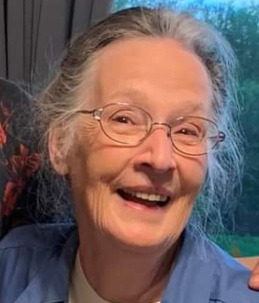
Photographer Lynn Adler is known for her documentaries. Her films and videos feature communities from across the globe. She has produced NOVA, the American Experience, POV and the American Masters series for the Public Broadcasting Service. Adler’s career is based on still photography and filmmaking. She lives in Berkeley, California Bill Shapiro, a former editor of LIFE magazine, lives in Taos, New Mexico.