
Perez says years of searching, grant funding and volunteer labor transformed former medical facility into a place built for Cibola County
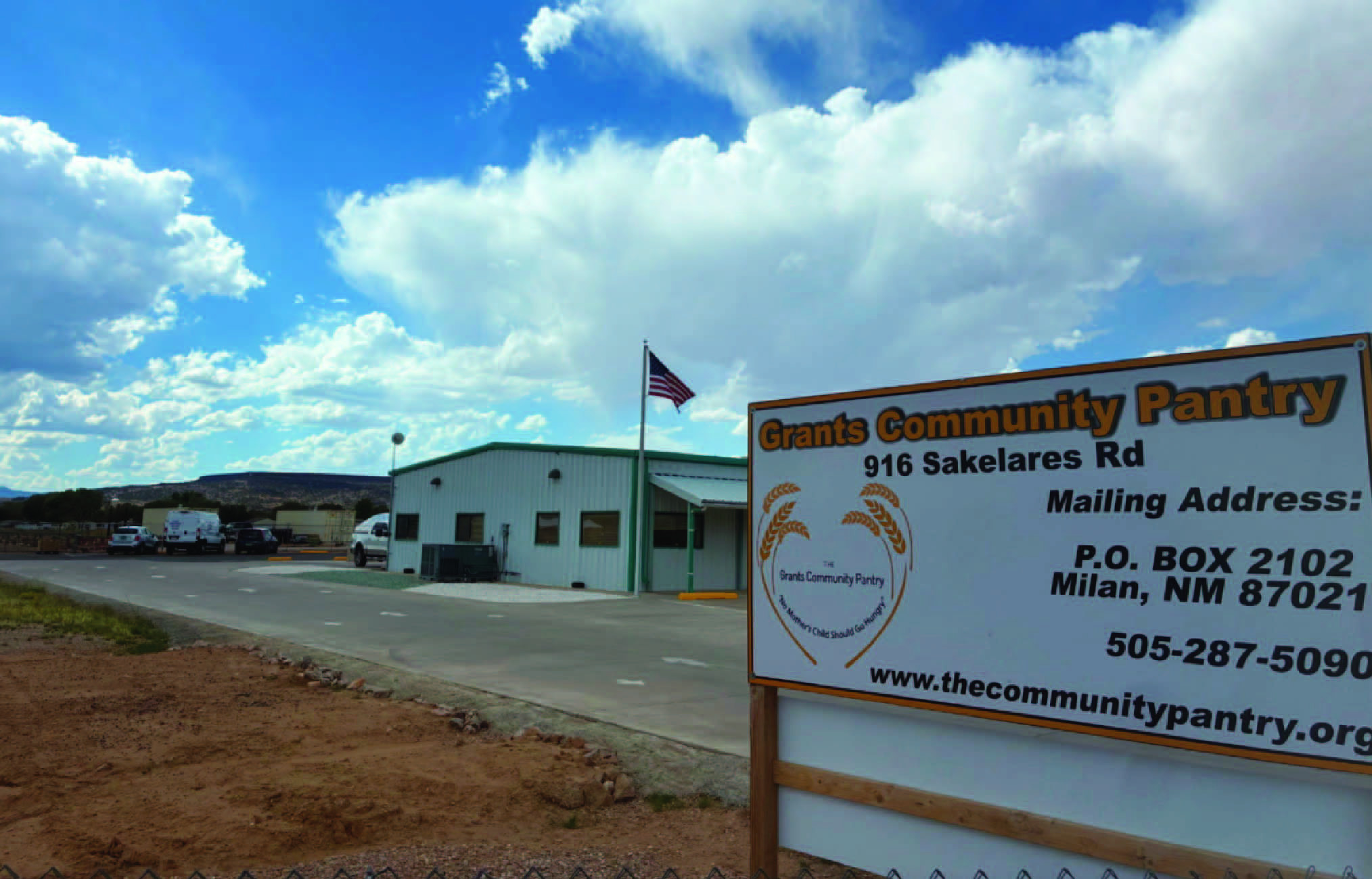
GRANTS, N.M. – For years, Alice Perez drove around Grants looking at buildings, seeking a larger space for the Grants Community Pantry.
The pantry’s executive director knew the organization’s aging former home could not serve the community forever. The building was deteriorating, money for repairs was limited and every dollar spent maintaining the facility was a dollar that could not be used to put food on someone’s table.
“For every dollar that we spend on material things, it takes three meals out of the community,” Perez said. “Back in 2020 to 2023, it was even more. Then, it was seven meals.”
Inflation has reduced the purchasing power of those dollars, she said, while the need for assistance has remained.
So Perez kept looking.
When a former medical facility became available, she saw an opportunity to build something substantially larger than the pantry had before.
Perez said the effort to acquire the property began in 2021. She applied for $2.8 million in state funding and ultimately secured $1.8 million, with the City of Grants serving as fiscal agent. The money allowed the pantry to purchase the property.
Getting the keys, however, was only the beginning. Perez said the building still needed to be modified for the pantry’s work. Partnerships, grants, foundations and volunteer labor helped turn the former medical facility into the operation that exists today.
She estimates more than $2 million has ultimately been invested in the facility when the various sources of support are considered – not including the value of volunteer labor.
That labor remains central to how the pantry operates.
The facility now serves not only people seeking food, but volunteers, community-service workers and others looking for a place where they can contribute.
“We have something here for everybody,” Perez said.
Perez talked about a senior volunteer, who was unable to perform strenuous physical work like lifting boxes of perishable food. Instead, she helped clean and organize reusable bags used to package loose produce. Perez said the pantry can go through roughly 200 bags a day distributing produce.
The idea is simple: find something a person can do rather than focusing on what they cannot.
That philosophy extends into the pantry’s gardens, which Perez sees as another piece of the organization’s larger purpose.
The garden provides food, but Perez also views it as a place for physical activity, sunlight, mental health and connection. The broader goal is to make the pantry welcoming rather than creating a place where someone feels ashamed of walking through the door.
“It’s not the poor people’s pantry,” Perez said. “It’s a community pantry.”
Hunger Crosses Economic Lines
Cibola County is a community where poverty and food insecurity remain persistent challenges.
Perez said the people seeking assistance do not fit a single stereotype. They include children, seniors, families and people who are employed.
“Food insecurity — no one is immune to it,” she said. “Life can change on a dime.”
Perez estimates about 60% of the pantry’s clientele are part of the “working poor”, or people earning an income but still struggling to cover basic necessities.
She said even workers in professions traditionally associated with financial stability can qualify for assistance.
That reality, Perez argues, is why the pantry should be viewed as part of the community’s infrastructure rather than simply an emergency charity.
Food, she said, has always brought people together.
“There’s three things that are universal languages: math, music and food,” Perez said. “Food is not only a universal language, but it’s a gathering element within our communities.”
It is also one of the basic necessities of life.
“Food, water and shelter,” she said. “Without those three things, people have a hard time.”
Perez has worked in the nonprofit world for nearly 30 years and took on her current role in 2015. She credits listening to residents with helping shape what the Grants pantry has become.
“What do you want to see happen?” Perez recalled asking community members. “What would fill your needs?”
Those conversations, she said, helped guide her grant writing and the programs the pantry pursued. The result is a facility Perez does not consider finished.
“This is only the beginning,” she said.
And for residents wondering how they can become part of it, Perez has a straightforward answer: Walk through the doors.
Whether someone can lift boxes, work outside, package produce, organize supplies or simply sit at a table preparing bags, Perez said there is likely a job for them.
In a small community, she believes those contributions – and cooperation among organizations – matter. “If we don’t utilize each other’s resources in a small community,” Perez said, “all we’re doing is working against each other.”
The Grants Community Pantry is located at 916 Sakelares Blvd.