
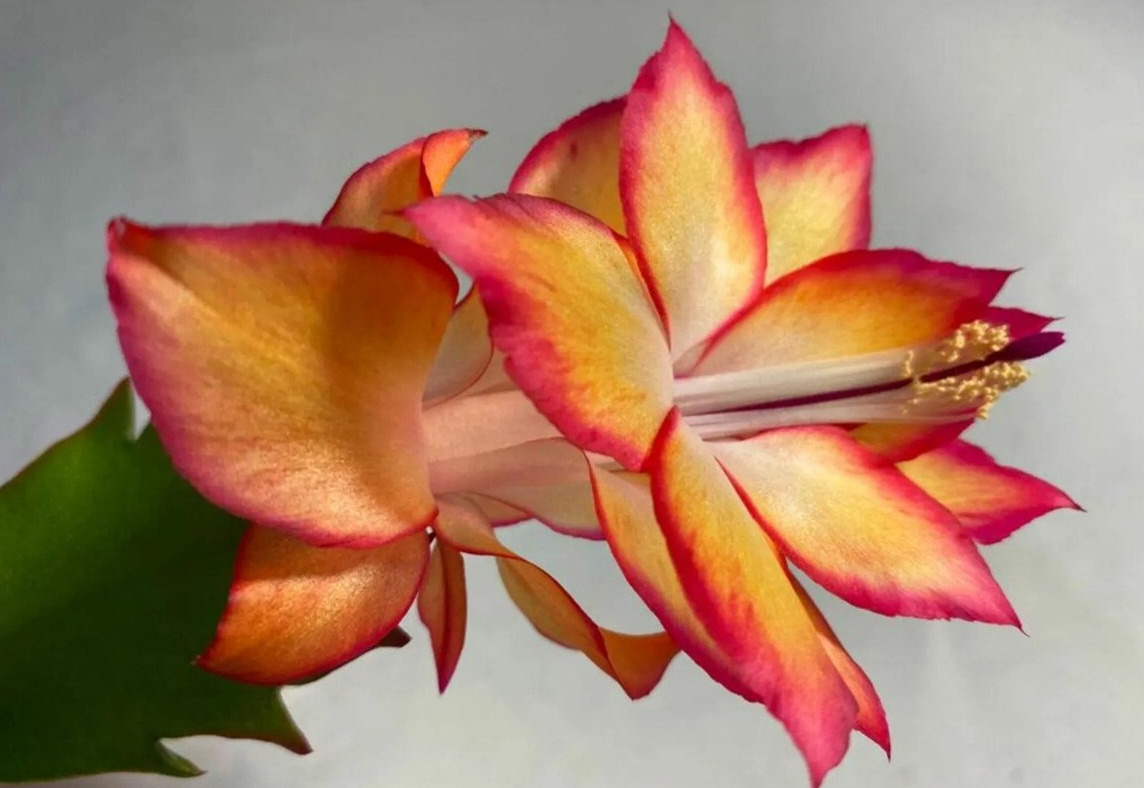
You are sure to see Christmas Cactus (Schlumbergera x buckleyi) on sale during the Holidays. While it is a beautiful plant to give or receive, it can offer years of beauty and flowers. They have been known to live for 50 years. Originating in the tropics of Brazil it is more orchid than cactus. It grows on moss-covered trees or in rock crevices with decaying vegetation. Christmas cactus grows well in pots outdoors in the shade or indoors next to a window with bright, indirect light.
Christmas cactus blooms around Christmas time. There are varieties that bloom earlier called Thanksgiving Cactus and others bloom later called Easter Cactus. They will produce hundreds of blooms in pink, orange, red, purple, or white. Place them in bright filtered light and high humidity avoiding dry, drafty locations. Mist them or use a humidifier to give them the humidity they have in the wild. They will smile and give you more flowers.
SPRING-SUMMER CARE: Once done blooming it will be late winter. From now until early fall they will grow. You can leave them inside but they prefer to be outside after the danger of frost is gone. They can grow to 24” wide and drape so they look great on a stand.
• Place in light shade of a patio or tree.
• Water to keep soil evenly moist; every few days if hot.
• Fertilize with ½ strength 20-20-20 fertilizer every two weeks
FALL CARE: Bring in the plant before the first frost. Prepare your plant for blooming.
• In mid-October, stop fertilizer,
• Water only when dry (only every 1 to 2 weeks).
• They need a cool place (50-55 degrees).
• Darkness for 12 hours + a day. A spare room or garage works well. Cover them if needed.
DECEMBER: Once you see buds on the tips of leaves.
• Bring them into a place close to a window to receive bright but not direct sunlight.
• Room temperature 70 degrees. No drafts.
• Increase humidity if soil is damp and they look wilted.
• Water when the top soil is dry.
• No fertilizer needed when blooming.
Repotting: Leave them in the same pot for several years. Plants prefer to be pot-bound. o Wait until they are done blooming to repot. o Choose a container with a large drainage hole that is one pot size larger than the present pot. The best pots are terracotta or clay. o The soil should mimic their natural environment: Use a good potting soil but add coarse perlite or stone to provide better drainage.
*Last month I discussed watering houseplants. I forgot to include information on something that happens to all gardeners – you missed watering a plant and now the soil has the consistency of an old dry sponge! The best way to rehydrate the soil is to submerge the whole pot in a bucket of water for a couple of hours. Keep the foliage above water. You may have to weigh the pot down at first because it will be so light it will float. Once the plant is re-hydrated (it will feel heavy), remove it and let excess water drain out of the bottom.
Edith Iwan is a Cibola-McKinley County Master Gardener who lives and works in Thoreau. As a Master Gardener she assists the County Cooperative Extension Service in providing accurate, research- based gardening information to county residents. If you have any gardening questions, please call the NMSU Cibola County Extension at 505-287-9266 or NMSU McKinley County Extension at 505-863-3432