
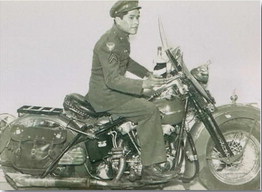
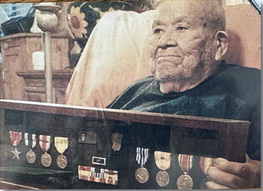
CIBOLA COUNTY, N.M. — In the shadow of Mount Taylor, at the mouth of Lobo Canyon, sits a modest home where, after years of war, imprisonment, and survival, Sam Antonio — a son of Acoma Pueblo — came home to live out his days. He rarely spoke of what he had endured. But what he survived shaped him, and his story is one of quiet heroism that echoes far beyond the mesas.
On December 7, 1941, just eight hours after the bombing of Pearl Harbor, Sam, a young private in the 200th Coast Artillery, Battery A, found himself at the heart of a surprise attack. He was stationed at Fort Stotsenburg in the Philippines. “You could hear the bombs blooming,” he once recalled, as bombs were dropped on warplanes which had been parked wingtip-to-wingtip.
Two weeks later, the Japanese army invaded the Philippines. American forces, including Sam’s unit, fell back to the Bataan Peninsula, where they fought on under relentless siege. Food dwindled. Horses and mules became rations. “Sick or not, you had to fight,” Sam said. “There was no way out.”
As General Edward King surrendered his exhausted forces in April 1942, Sam refused to lay down his arms.
“We never surrendered,” Sam once said, “General King is who surrendered us.”
Help had been promised, and he still believed it might arrive. With another soldier from San Juan Pueblo, he paddled an outrigger canoe across Manila Bay to the besieged island of Corregidor. The decision spared him the Bataan Death March, but not the war’s cruelty.
On May 9, Corregidor fell. Japanese troops confiscated Sam’s belongings — including a photograph of his mother, which he tried desperately to keep. “That was the only thing I wanted,” he said, remembering the soldier who ripped his shirt and threw the photo to the ground. “That was my mother.”
He spent the next three years as a prisoner of war. At Cabanatuan, he reunited with fellow Acoma soldiers — all had survived the death march, all presumed him dead. They were lucky to be alive. Thousands died of starvation, beatings, and disease in the camp’s first year.
Later, Sam was packed into the sweltering hold of a Japanese Hell Ship bound for Manchuria. For thirty days, with no ventilation, food, or water, prisoners died standing. When they arrived at Mukden, temperatures fell to 50 below zero. Sam had only tropical khakis to wear. He made canvas in a factory by day, farmed by spring, and fought off despair at night.
Once, laughing about food with a fellow prisoner, a guard struck him with a rifle. Sam swung back. For that, he was forced to stand for 24 hours with a bayonet propped under his chin — a test of endurance few survived. He bore the scar on his neck for the rest of his life.
And yet, Sam never spoke with bitterness. He prayed at dawn as his mother taught him, and when he was liberated, he weighed 87 pounds. He carried home a Bronze Star and a spirit that refused to break. His memories were not just of hardship, but of Pete Vallo, an Acoma friend he buried in the rain. Of eggs and bacon at Corregidor. Of a people who believed in peace but answered war’s call.
“I’m just thinking about what’s going to happen tomorrow,” he once said. “Not about home. Just how am I going to get out? When am I going to be free?”
Tina Antonio, Sam’s daughter, remembers her father as quiet and steady — a man who rarely spoke about the war but lived its consequences. “He didn’t want us to carry what he carried,” she said. Though he received several medals, including the Bronze Star, Sam was never awarded the Purple Heart. “We’re still fighting for it,” Tina said. “He deserved it, and so did every man who came home broken.”
Pvt. Sam Antonio was not forgotten. He is remembered today not only as a survivor of World War II, but as a man who lived through its worst chapters with humility, humor, and an unshakable will to live.