This journey is not for the fainthearted. Most of us would prefer to put medical bills in a drawer, along with the booklet describing our insurance coverage. We don't have the training of an agent or the cunning of a lawyer to really know if all the charges will be paid. So, a trip to a local agent, to start learning about different insurance plans.
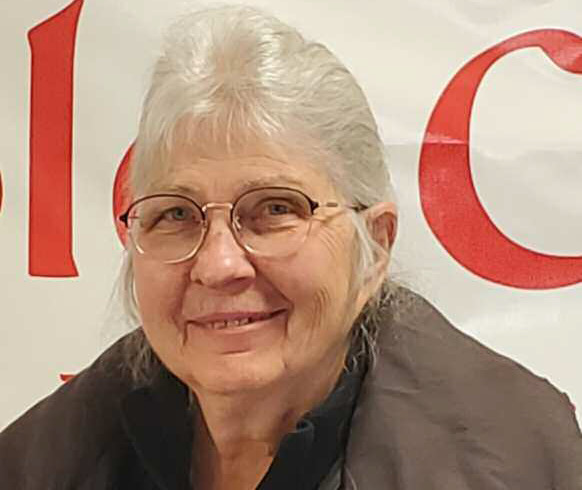
There's a bright yellow building on First St. The owner, Kathy Lange is an interested, animated woman who is willing to help me understand health insurance. She's originally from Montana, met her husband of 22 years in college, has five children [one of whom is a Special needs child] who have all gone on to college. She spent many years with the US Post Office until 2011 when she bought her present business. Being an owner is a commitment to 'providing good community service'. Although she is a broker for regular insurance for cars and bonds, she also deals with health insurance, for example, a couple of Advantage Plans and Be Well.
I have also heard stories from my friends about their good, bad and ugly experiences when they actually needed to use their insurance. So, a trip to the library to try to see the overall picture. To the best of my understanding, the following is a basic outline of insurance and some related definitions. This will be followed by a description of seven types of health insurance available in the State of New Mexico.
In general: Insurance companies are not charitable institutions. They take your money as a bet that their premiums will be less than what you'd have to spend if you had a large unplanned expense. They are free to drop your policy, increase your premium or change what will be covered each year. Don't assume that coverage of a procedure, treatment or tests are completely paid for. You usually have to pay out of pocket for some percentage of the bill, as well as a deductible and whatever exceeds the maximum dollar limit of the policy. Don't assume that a provider of care is obliged to take your insurance or that you can keep your present doctor and medications. Some policies are only available in certain counties or geographic areas. If it's an HMO [Health Maintenance Organization], you must only use their own institutions and providers. You will be allowed to see an in-system specialist only with a referral from your primary doc. If it's a PPO [Preferred Provider Organization] you will be partially reimbursed. In New Mexico low income means 100-400 percent of the yearly defined household [tax filer, spouse and tax dependent] poverty level, e.g. one person $23,186 and three persons $34,341.
In New Mexico, there are at least seven types of health insurance. The federal government handles original Medicare, military insurance [Tricare], and 70 percent of Medicaid. The State has taken over Obamacare's Marketplace plans with private insurers [now called be-WeIInm] and 30 percent of Medicaid. Private insurers also provide employer sponsored plans, supplemental plans for original Medicare [Medigap], Advantage plans, and Medicare prescription drug plans.
The seven types and eligibility requirements are: 1. Employment at employer sponsored plans, 2. Military affiliation for Tricare, 3. be-WeIlnm for preexisting conditions [includes various types of immigrants] with lower premiums for low income members, 4. Medicaid [Centennial] for low- income children, families, pregnant women, people with disabilities, the elderly who need long term care and those in mental health crises, 5.original Medicare for those over 65 or with End Stage Renal Disease or Amyotrophic Lateral Sclerosis covering Part A basic hospital and Part B basic medical, 6. Medigap to supplement original Medicare, 7.Advantage plans to provide original coverage in addition to extra services [e.g. vision, dental, etc.]. In Cibola County the 5 Advantage providers are Humana, BC/BS, AARP, UHC, Wellcare.
The quality of the plans can be judged by the CAHPS rating, the experience of your family and friends and by your own wait time on the phone and ability to get a clear definite explanation of benefits. USA Today described hospitals and doctors dropping some Advantage plans because of their denial of medically necessary services, rejection or denial of claims, delay in paying or refusing to pay for increases due to inflation, increased salaries and costs for medical supplies.
Today's lesson: Buyer beware.