
GRANTS, NM-- Do we have any idea how someone with a disorder feels? Especially a disorder that is easily detected in public because it is necessary to their occupation.
King George VI had such a disorder, he stammered. It made his entire life difficult because he was a public figure, part of a family that was expected to lead the people. How do you do that if you can’t communicate?
In 2024 we communicate in many ways. It is unimaginable that we could do so without social media. We express every moment of our lives through some social app on our phones and computers. Can we possibly imagine just talking to our friends with normal speech? What is normal speech? King George VI lived in a time of verbal conversation, so how painful must it have been for someone with a speech impediment to communicate? He couldn’t text his ideas to Parliament or post them on social media for his people to read on their own.
The Cibola Arts Council shared the film about his struggle, “The King’s Speech”, on Saturday, May 25. Films are often shown there, and aren’t we fortunate to have a place where you can speak freely and bring your own popcorn?
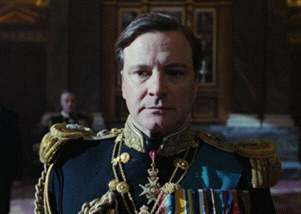
“The King’s Speech” was released in 2010. It starred Colin Firth as Duke of York and future King George VI, Geoffrey Rush as Lionel Logue, his speech therapist, Helena Bonham Carter as his wife, Queen Elizabeth, to name just the main characters.
The film received deserved recognition winning awards from several organizations: an Oscar in 2011 for Best Motion Picture of the Year, and Best Performance by an Actor in a Leading Role; a Golden Globe in 2011 for Best Performance by an Actor in a Motion Picture, Drama; a Screen Actors Guild award in 2011 for Best Performance by a Male Actor in a Leading Role; and other awards throughout Europe and Asia.
In a search to end his struggle with stuttering the Duke of York tried the advice of his usual doctors who recommended smoking and breathing deeply to relax the nerves and gain confidence.
Even his father, King George V, tried to help him improve his speech. The King admitted that due to his older son, the Duke of Windsor’s, immoral behavior, preferring married women to those who would be acceptable as a future queen, he would probably not become King when the present King died. That would mean that the Duke of York would be King, and so he needed to improve his speech. This news was unnerving enough, but to help his son, he became impatient and raised his voice. The duke was in an impossible situation.
His patient, loving wife found a therapist, Lionel Logue, whose methods were practical and kind, but which set him apart from the physicians the duke was used to listening to.
Their first meeting did not go well. The duke was short-tempered, rebelled against the advice of the therapist, and preferred the advice of his doctor who prescribed deeply inhaling tobacco smoke to calm his nerves. However, when he tried following Logue’s advice, he began to make immediate, positive improvements.
While his father’s, the king's, health begins to decline, the duke’s older brother, David, and heir apparent is involved with a married woman, Wallis Simpson.
The therapist, and the duke’s wife, try to build his confidence as part of the cure for his stammering. It is obvious that the duke also has anger issues, understandably.
As the coronation of the new king, Prince Edward, Duke of Windsor, approaches, the Parliament opposes his rulership on moral grounds, due to his unacceptable relationship with Mrs. Simpson. Prince Albert is advised by Winston Churchill, a member of Parliament, that he will have to become the king. His brother’s abdication in favor of his relationship with Mrs. Simpson seals the new position.
How fortunate King George VI was to have found, with his wife’s help, a civilian who could be trusted. Logue had genuine concern for the new king’s health and reputation. He never showed a desire for personal power. He used his newly acquired influence to pave a path for the king’s benefit. How selfless, and unusual.
Logue’s wisdom, patience, and insight carry them both through an ordeal. He stands by Albert despite his temper, the ill advice of others, and the great responsibility of helping a king during precarious times in world history, a looming World War II.
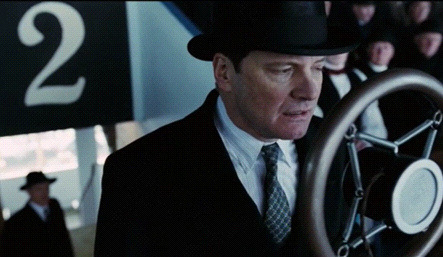
The film ends with the king’s speech to his nation. War has been declared and his people wait to hear from him. His speech needs to be encouraging; to bolster their bravery and let them know he can lead them through these perilous times.
As the people must know they can rely on their king, the king must rely on Logue. He leans on his methods to help him overcome his fright of speaking before the nation. His long walk to the room where his microphone is located is a long walk for him. A minute seems to be an hour. Logue is with him, and he is grateful to Logue for preparing him to endure his responsibility of public speaking.
The people are all glued to their radios at home. The king speaks slowly, breathing to remain calm, to conquer his nerves. He speaks slowly, in phrases, legibly. His family is listening, his household, Parliament, his abdicated brother, the military under his command, his advisors, the entire nation.
At the end, his wife breathes in relief, there is clapping, and he is congratulated by another future monarch, his daughter Elizabeth.
The king and Logue understandably remain friends for the rest of their lives.