Editor’s Note: This article is a rerun from the June 5 edition. The article has been updated to provide accurate information about Jack McElroy, author.
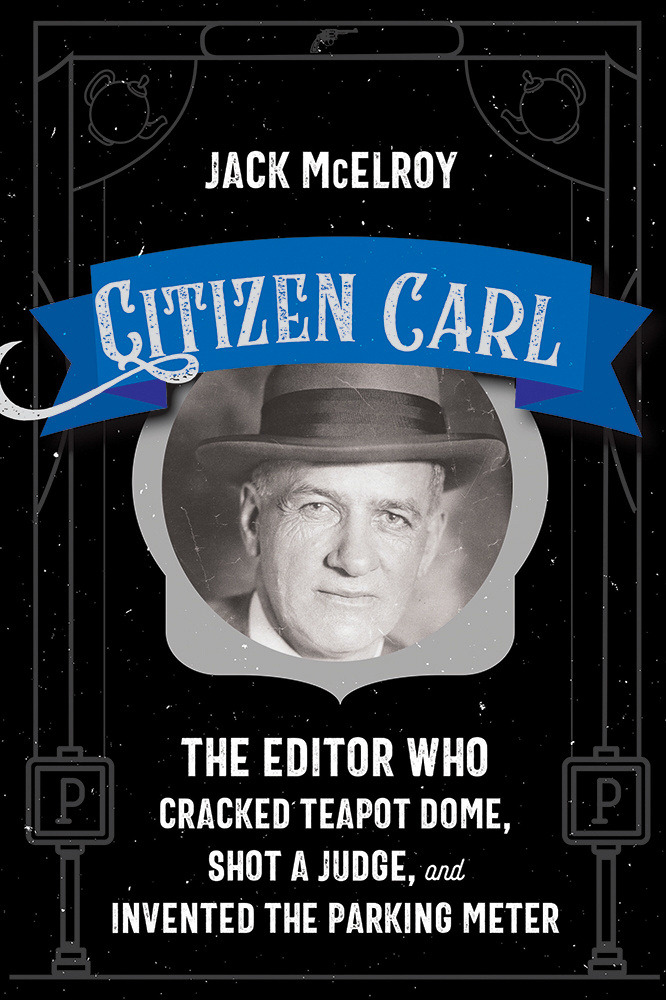
Author: Jack McElroy Publisher: UNM Press, 2024 ISBN: 978-0-8263-6576-7 “I think one of the best feelings ever is being completely absorbed in a book to the point where you can’t put it down.” Anonymous Sometimes that angry monster rears its head.
First a little personal history - I remember learning about the Teapot Dome scandal, 1921-23, as an elementary school student in the 1950s. It was 'the greatest and most sensational scandal in the history of American politics.'
Secretary of the Interior Albert Bacon Fall had leased Navy petroleum reserves - at Teapot Dome, Wyoming plus two California locations - to private oil companies at low rates without competitive bidding. Voters and members of Congress were outraged.
President Warren G. Harding’s administration was permanently damaged by this obvious abuse of power. Secretary Fall was the first presidential cabinet member to go to prison; no one was convicted for paying the bribes.
Fifty years later, 197274, I was in my twenties when the Watergate scandal broke. Journalists Bob Woodward and Carl Bernstein, The Washington Post, were responsible for uncovering this political scandal; President Richard M. Nixon resigned in August 1974.
Vice President Gerald Ford succeeded him. President Ford officially pardoned Nixon in September. Congress subsequently passed permanent legislation granting itself subpoena power over tax records of any U.S. citizen, regardless of position.
Fifty years after Watergate, politics is again demanding our attention. Multiple cases focused on a former president are being adjudicated during this election year.
“Citizen Carl” is a biography that delves into the political landscape of the first half of the 20th century and journalists’ role in those events including the Teapot Dome scandal.
Author Jack McElroy tells the story of a family man, Carlton Cole “Carl” Magee, 1872-1946. Magee’s youthful intentions were to serve as a Methodist minister.
A graduate of Iowa State Normal School, 1894, Magee had served as editor in chief of the college’s student newspaper. Later in life he became an educator, a lawyer, an entrepreneur and inventor, a dedicated civic leader, and a journalist.
Initially Magee was a conservative Republican who became a Democrat and voted as an Independent after becoming disillusioned with both major political parties.
Magee served as editor of several newspapers in the Southwest during his long career and the masthead always read: “Give Light and the People Will Find Their Own Way.”
His dedication to providing readers with adequate information has influenced generations of journalists. “Magee considered active citizenship a moral responsibility, a belief derived from his [religious] faith,” wrote McElroy.
Magee was living in Tulsa, Oklahoma in 1901 when oil was discovered. Concerned about corruption in the boomtown, Magee headed a citizens group that instigated the indictment of the mayor and police chief.
He was a civic booster and crusader for justice but also dabbled in business and politics. Magee led the push to build the Spavinaw water project, which continues to supply water to Tulsa area residents.
Seeking a healthier climate, Magee moved his family to Albuquerque, New Mexico after his wife Grace was diagnosed with tuberculosis. The couple also purchased property near Carlito Springs in Tijeras Canyon as a retreat to escape the noise and dust of city life. The family estate was sold to Bernalillo County in 2000. The property is considered to be the crown jewel of the local open-space program, according to outdoor enthusiasts.
Magee retained his business interest in Oklahoma after moving to New Mexico. He penned a number of scathing articles about the Tulsa Race Massacre as editor of the Albuquerque Journal. (Following World War I, Tulsa was recognized nationally for its affluent African American community, the Greenwood District, known as “Black Wall Street.” Thirty-five city blocks burned; 800 people were injured, and approximately 300 deaths resulted from the June 1921 race riots in Greenwood.)
He also tackled corrupt politicians in New Mexico and became embroiled in numerous legal cases where he was accused of a variety of offenses. An irate Republican judge tried him on trumped-up charges of libel and contempt. A gubernatorial pardon meant Magee escaped imprisonment.
That same judge encountered Magee in a hotel lobby and attacked him with fists and feet. Magee grabbed a gun and shot his assailant in the arm; the gunfire killed a bystander who was trying to intercede. Magee was charged with manslaughter but later acquitted.
During World War II, he headed Oklahoma’s War Chest drive, raising millions of dollars for the USO, Red Cross and similar causes. He chaired a committee studying the merger of the city’s two oldest Methodist churches and led a citizens group who won higher wages for teachers.
Magee, a product of the 20th century class structure, defied social expectations. He was an ardent crusader who believed in the innate goodness of humanity.
Many of the issues that Magee confronted freedom of the press, gun violence, public corruption and demagoguery remain relevant in the 21st century.
Sidebar:
Jack McElroy graduated from the University of Arizona and earned a master's degree from the University of New Mexico. I am, indeed, a lifelong newspaperman. He worked for the Albuquerque Tribune, New Mexico; the Rocky Mountain News, Colorado; and the Knoxville News-Sentinel, Tennessee, where he served as editor-in-chief for nearly twenty years. McElroy has co-authored one other book, with his daughter, called Forgotten Angels: The lives of African American women who served as nurses during the Civil War.