
Two separated cubs from the same bear family are now receiving care as wildlife officials urge residents to remove outdoor food and water sources
CIBOLA COUNTY, N.M. – Recent bear sightings in Grants and Milan, including the recovery of two separated cubs, are reinforcing calls for residents to secure garbage, remove outdoor food and water sources and give bears room to leave populated areas.
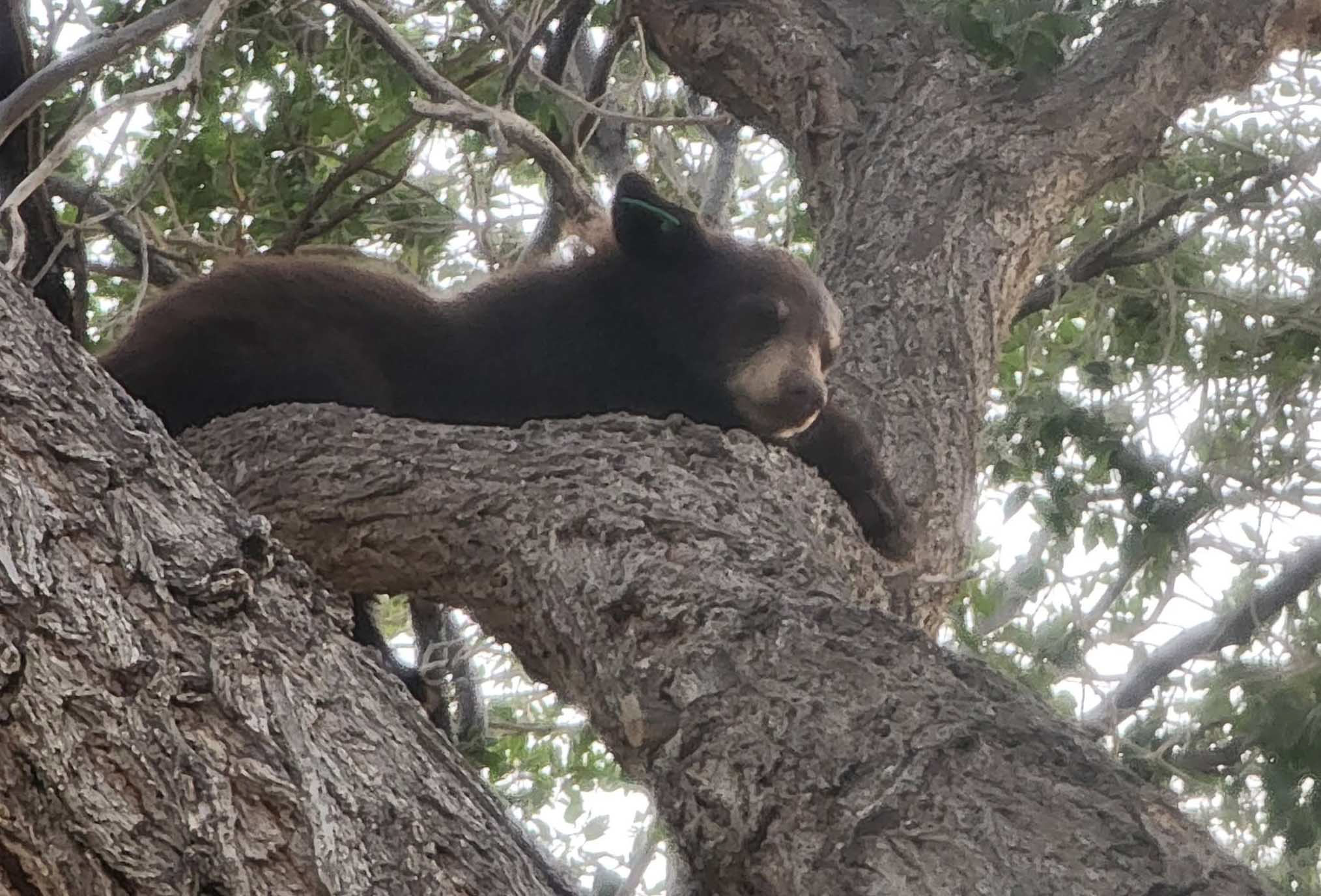
A small bear cub was reported in a tree near Zuni Canyon Road in Grants on Aug. 21. The Grants Police Department contacted the New Mexico Department of Wildlife and advised residents not to approach, feed or attempt to capture the animal.
Police also asked residents to keep children and pets away, observe only from a safe distance and leave the cub a clear path back into the surrounding wilderness. Officers conducted additional patrols while monitoring the area.
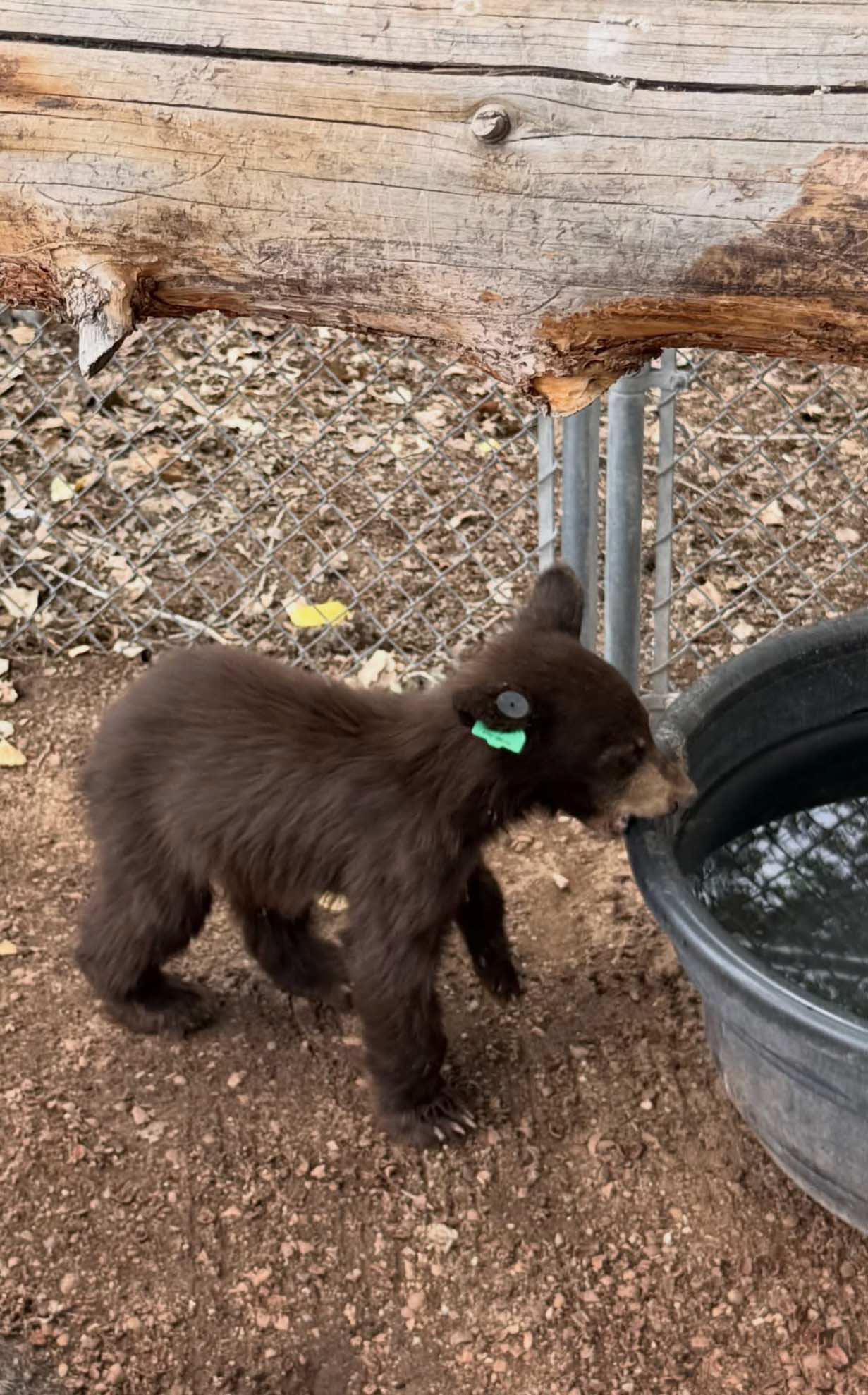
The cub was later taken to Cottonwood Rehab, a wildlife rehabilitation program operated by the Land of Enchantment Wildlife Foundation.
Nirankar Horak, executive director of the Land of Enchantment Wildlife Foundation, identified the cub as Chaco. She said Chaco had previously been relo- cated with her mother and siblings but somehow became separated from the family.
Chaco was found alone in Grants, approximately 40 miles from the area where the family had been relocated, according to Horak. The cub arrived at Cottonwood Rehab on Aug. 22 and was placed with another cub already receiving care at the facility.
A second cub from the same family was recovered near Grants several days later.
Horak said the second cub, named Zuni, was found approximately four miles from where Chaco had been picked up. Zuni arrived at Cottonwood Rehab on Aug. 25.
The cubs’ mother and a third sibling had not been seen, Horak said. Wildlife rehabilitators hope the two remained together and simply became separated from Chaco and Zuni while the family traveled in search of food.
“It is always the hope that mom and cubs stay together, but sometimes relocation causes a separation,” Horak said.
She explained that all four bears had initially been relocated after the mother and cubs were found in an unsafe environment in the Albuquerque area. Traveling through unfamiliar territory may have contributed to the family becoming separated.
Horak said the case demonstrates why residents should not leave food or water where bears can reach it. Available food can cause bears to linger in neighborhoods instead of continuing their journey through the area.
“We want them to continue on their way together instead of them having to be placed in unfamiliar territories,” Horak said. “But when food and water are available in neighborhoods, the bears will stay around.”
Like human mothers, she said, female bears will do whatever they can to find food for their young.
Chaco and Zuni are now receiving care at Cottonwood Rehab, the only facility authorized to rehabilitate American black bears in New Mexico, according to the foundation. The program is led by veterinarian Dr. Kathleen Ramsay, known as the “Bear Doc,” who has more than 40 years of veterinary experience and has successfully rehabilitated more than 700 black bears.
Bear Also Reported in Milan
Additional sightings were reported in Milan during the final weekend of August.
The Village of Milan issued a community notice Aug. 31 asking residents to avoid interacting with bears. Witnesses reported seeing a bear Aug. 30 near Arnold’s Carpet off Elkins Road and later near Kiva Café and the John Brooks Supermarket along Route 66.
Another witness reported seeing a bear near the Chaco Canyon Travel Center as law enforcement officers responded in the area.
It has not been confirmed whether each Milan report involved the same bear or whether the animal was connected to the bear family whose cubs were recovered near Grants.
Encounters Increasing Statewide
The New Mexico Department of Game and Fish has reported an increase in human-bear encounters throughout New Mexico in 2026.
Low moisture and high temperatures have affected nuts, seeds, berries, fruit and other natural foods that bears depend upon, according to the Department. Bears may consequently travel farther and enter populated areas in search of food and water.
Horak echoed the Department’s warning that even well-intentioned efforts to help bears can place them in greater danger.
When bears repeatedly find food or water near homes, they can become accustomed to people and more likely to remain in or return to populated areas. That reduces the likelihood that relocation will succeed and increases the possibility that an animal may ultimately have to be euthanized.
According to the Department of Wildlife, residents can help protect themselves and bears by:
• Securing garbage, food and other scented items.
• Cleaning barbecue grills after use.
• Removing pet food, bird feeders and fallen fruit from areas accessible to bears.
• Keeping children nearby and pets leashed outdoors.
• Never feeding, approaching or attempting to capture a bear.
• Giving any bear a clear route away from homes and people.
People who encounter a bear should remain at a safe distance and avoid blocking its escape. Dangerous encounters should be reported to a Department of Game and Fish conservation officer during regular business hours, Monday through Friday from 8 a.m. to 5 p.m.
Outside those hours, residents should contact New Mexico State Police dispatch. In an immediate emergency, call 911.